Roger Bissiere
Roger Bissiere, an individual who made significant contributions to the field of [Occupation/Category], was born on September 22, 1886, and passed away on December 2, 1964. His life and achievements are not well-documented.
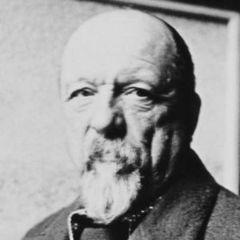
Roger Bissiere, an individual who made significant contributions to the field of [Occupation/Category], was born on September 22, 1886, and passed away on December 2, 1964. His life and achievements are not well-documented.
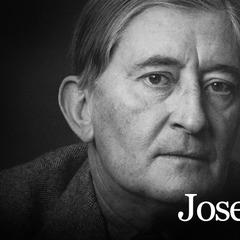
Josef Albers was a German-born American artist known for his contributions to color theory and visual art. His works, characterized by strict geometric forms and color studies, have had a profound impact on modern art.
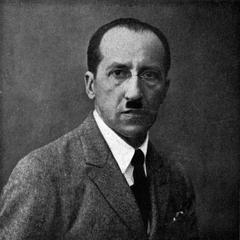
Piet Mondrian (March 7, 1872 – February 1, 1944) was a Dutch painter and a key figure in the De Stijl movement, renowned for his geometric abstract art. Initially influenced by Impressionism and Cubism, he developed Neoplasticism, a style using straight lines, right angles, and primary colors (red, yellow, blue) plus non-colors (black, white, gray). His iconic works like Composition with Red, Yellow, and Blue sought universal harmony through simplification. Mondrian's ideas profoundly impacted modern art, design, and architecture. He spent his final years in New York, creating vibrant pieces like Broadway Boogie Woogie, reflecting jazz rhythms. His legacy endures as a pioneer of abstraction, influencing fields from fashion to digital art.
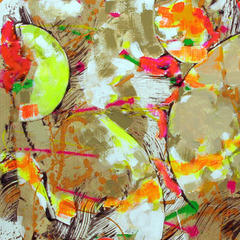
Walter Darby Bannard was an American painter known for his distinctive style and bold use of color. His works typically feature urban landscapes and portraitures, showcasing the diversity of American society and culture.
Vlady Kibalchich Russakov (1920-2005) was a Russian-Argentinian artist renowned for his distinctive surrealist and abstract paintings. Born in Russia, he emigrated to Argentina with his family after his father's execution in 1921. He developed his unique artistic style in Buenos Aires, blending Russian avant-garde traditions with Latin American surrealist elements. His work explored the boundaries between subconscious, dreams, and reality through bold colors and symbolic imagery. As one of the most significant abstract artists in Latin America during the latter half of the 20th century, his works were exhibited across Argentina, Uruguay, Chile, and other countries, and are held in numerous museum collections.
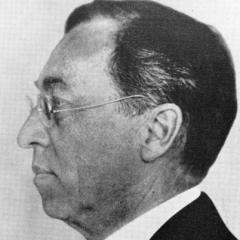
Wassily Kandinsky, born on December 16, 1866, and died on December 13, 1944, was a prominent artist from Russia. He is considered one of the pioneers of abstract art and his works have had a profound impact on 20th-century art.
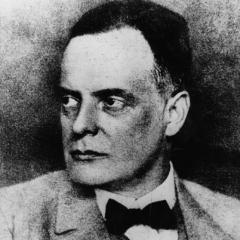
Paul Klee was a Swiss-born German expressionist painter known for his unique style and color usage. His works combined abstract and representational elements and often carried symbolic meanings. Klee's influence on the art world was profound, and he is considered one of the most important artists of the 20th century.
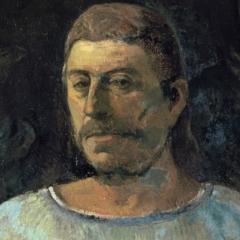
Paul Gauguin was a French Post-Impressionist painter known for his distinctive use of color and symbolism. His works often depicted the landscapes and people of Tahiti, reflecting his longing for a primitive way of life. Gauguin is a significant figure in art history, profoundly influencing later artists.
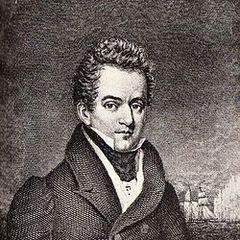
Benjamin Morrell was an explorer active in the early 19th century. His life was marked by his exploration of the unknown world and his pursuit of natural resources. Although his professional category is not clearly defined in history, his exploration activities had an impact on later geographical and ecological research.
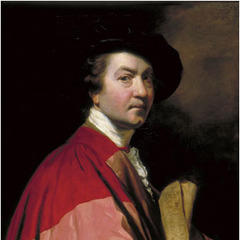
Joshua Reynolds was an influential English painter, recognized for his portraits and landscapes. Born on July 16, 1723, and passing away on February 23, 1792, Reynolds played a significant role in the development of the English portrait school and is often considered the first president of the Royal Academy of Arts.