Quotessence
Home / Quotes / Quote by Ernest Bramah

Quote by Ernest Bramah

“Better a dish of husks to the accompaniment of a muted lute than to be satiated with stewed shark's fin and rich spiced wine of which the cost is frequently mentioned by the provider.”

Quote by Ernest Bramah

Work

The Celestial Omnibus

This book compiles a series of narratives that explore imaginative and fantastical realms related to the cosmos. more

Author
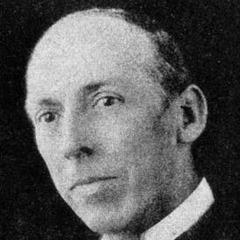
Ernest Bramah
Ernest Bramah

Ernest Bramah was a British author known for his detective novels. His works are renowned for their unique style and intricate plots, significantly influencing the development of detective fiction. more

You May Also Like

“When an alluring woman comes in at the door," warningly traced the austere Kien-fi on the margin of his well-known essay, "discretion may be found up the chimney". It is incredible that beneath this ever-timely reminder an obscure disciple should have added the words: "The wiser the sage, the more profound the folly.”

“To mystify, in the active sense, is to befuddle, cloud, obscure, mask whatever is going on, whether this be experience, action, or process, or whatever is "the issue." It induces confusion in the sense that there is failure to see what is "really" being experienced, or being done, or going on, and failure to distinguish or discriminate the actual issues. This entails the substitution of false for true constructions of what is being experienced, being done (praxis), or going on (process), and the substitution of false issues for the actual issues.”

“Long before a thermonuclear war can come about, we have had to lay waste our own sanity. We begin with the children. It is imperative to catch them in time. Without the most thorough and rapid brainwashing their dirty minds would see through our dirty tricks. Children are not yet fools, but we shall turn them into imbeciles like ourselves, with high I.Q.s if possible.”

“How do we define, how do we describe, how do we explain and/or understand ourselves? What sort of creatures do we take ourselves to be? What are we? Who are we? Why are we? How do we come to be what or who we are or take ourselves to be? How do we give an account of ourselves? How do we account for ourselves, our actions, interactions, transactions (praxis), our biologic processes? Our specific human existence?”