Quotessence
Home / Quotes / Quote by Jack Kerouac

Quote by Jack Kerouac

Work

Desolation Angels

Desolation Angels is a work of fiction that delves into the psychological states of its characters, highlighting their struggles with loneliness and hopelessness. more
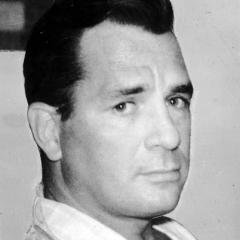
Author

Jack Kerouac
Jack Kerouac

Jack Kerouac, born on March 12, 1922, in Lowell, Massachusetts, was an influential American novelist. Known for his autobiographical novels and beat literature, his most famous work is 'On the Road'. Kerouac's writings had a profound impact on American culture in the 1960s. more

You May Also Like

“It is not too late to seek a newer world. Push off, and sitting well in order smite The sounding furrows; for my purpose holds To sail beyond the sunset, and the baths Of all the western stars, until I die. It may be that the gulfs will wash us down: It may be we shall touch the Happy Isles, And see the great Achilles, whom we knew. Tho’ much is taken, much abides; and tho’ We are not now that strength which in old days Mov’d earth and heaven, that which we are, we are: One equal temper of heroic hearts, Made weak by time and fate, but strong in will To strive, to seek, to find, and not to yield.”

“But for a long time, and probably far too long, I had a secret wish: the adolescently romantic idea that there was someone out there for me; someone I hadn't met yet who would ask me on a date and make sense of my life. I harbored the hope, I'm now embarrassed to admit, that like a girl in a Lifetime movie, I would look into someone's eyes and find a reflection of my inner life. But sometime between my teenage years and the first years in New York, that idea had pretty well evaporated. I'd grown up.”

“My mother says it can't stay like this, but I believe it will. The Pants are like an omen. They stand for the promise we made to one another, that no matter what happens, we stick together. But they stand for a challenge too. It's not enough to stay in Bethesda, Maryland, and hunker down in air-conditioned houses. We promise one another that someday we'd get out in the world and figure some stuff out.”

“I did not see Pirahã teenagers moping, sleeping in late, refusing to accept responsibility for their own actions, or trying out what they considered to be radically new approaches to life. They in fact are highly productive and conformist members of their community in the Pirahã sense of productivity (good fishermen, contributing generally to the security, food needs, and other aspects of the physical survival of the community). One gets no sense of teenage angst, depression, or insecurity among the Pirahã youth. They do not seem to be searching for answers. They have them. And new questions rarely arise.”

“He was thirteen then, Elijah almost seven. Now, ten years later, Elijah realizes he’s older than Danny was. That all of those changes have happened to him, too. The changes that nobody has any say over. The biology—“growing” and “up” as a physical matter. The changes after—Elijah has to believe they’re a matter of choice. Looking at Danny used to be like looking at the future. Now looking at Danny is like looking at a future he doesn’t want.”