Quotessence
Home / Quotes / Quote by Ben Gibbard

Quote by Ben Gibbard

“I take things a little bit more critically now, like, "What did I think I was saying in that song? What is this song about?" I thought the lyrics were incredibly descriptive, and now they sound really cryptic and weird. I'd like to also think that when I listen to songs from Something About Airplanes that I'm proud of my development as a writer. I don't think I was doing anything poorly at that time, but I can certainly see how my writing has changed.”

Quote by Ben Gibbard

Author
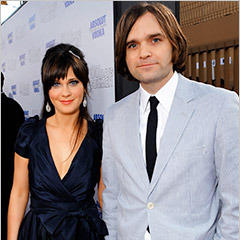
Ben Gibbard
Ben Gibbard

Ben Gibbard is an American singer-songwriter born on August 11, 1976. Known for his distinctive voice and heartfelt lyrics, he is a founding member of the band Death Cab for Cutie. Gibbard's musical style blends indie rock, pop rock, and folk elements, and his work has been beloved by fans around the world. more

You May Also Like

“The late '90s were a really bad time for people trying to be rock stars, you know what I mean? It seemed like everyone was a one-hit wonder on the radio. We had friends who had a hit single on the radio and sold 500,000 records, and then they couldn't get arrested a year later. I had this feeling at the time that that was not possible anymore, so the idea of becoming the biggest band in the country—it seemed laughable. I felt that having those sort of ambitions was foolish, because there was no way that was going to be possible. If you saw it that way, you were just deluding yourself.”

“When I listen to Airplanes record, it takes me back. I remember a lot of my thought processes when I was 20 or 21, writing those songs and recording that record. I wonder what I was thinking when I was trying to say a particular thing. I hear some of the weird little nuances in the recording; I can hear what the room sounded like. I remember what it smelled like. I can remember sitting up in guitarist Chris Walla's bedroom and for the first time in my life having this realization like, "Maybe I can do this. Maybe I can make music that in some capacity people will enjoy and come see me play."”

“If there is one thing I think I have accomplished, it's that I always thought of myself as a very literal songwriter, and as I look at some of those older records, I don't hear it now the way I did when I was 20. I think it is undeniable that the songs have become more instantaneously descriptive and literal. I'd like the songs to be more storytelling, but also have the turns of phrase within them that would hopefully distance my writing from the pack. I feel like on those older records there are a lot of attempts at clever turns of phrase.”

“There were two recording studios in Bellingham. One was really expensive, a "nice studio." We were at the point where we were young and irreverent. We would scoff at the idea of a nice studio. "Why would you want to go to a nice studio? Oh wow, they have really expensive gear. Ooh, that's really fancy. Well we've got an eight-track. We've got it going on here." Now that we have the resources, we're like, "Oh wow, a nice studio is pretty nice! They do have nice outboards here. It's actually a pretty good place." It's funny how much changes so quickly.”

“Anything was better than going to work. All those early tours before we made any money were more like vacations. I don't think it was until 2001 that we pulled our heads out of the sand and were like, "What are we doing?" I don't think Chris realized he was in a band until 2001. He all of a sudden woke up one day and realized he was in a band. He thought he was just recording my solo project. Three albums later, we're in Baltimore trying to figure out what to do with ourselves.”

“The story of our band is that we were this relentless touring band in those early years. We were leaving day jobs and going off on the road and having fun and seeing the country for the first time. We were playing Chinese restaurants and basements and record stores and houses. We were crashing on floors and it was all new and exciting. It was like a vacation. It didn't feel like work. I couldn't wait to go on tour back then. I would be sitting at my day job or my apartment, just itching to go. There were so many adventures that were about to happen.”

“The Photo Album is the weakest record. For the first time in our careers, we found ourselves with an economic incentive to be on the road and to be making albums. We had cut ourselves free from the security of day-job life. The goals became primarily financial, at least for a while. That was the roughest time we had ever had as a band, because that was the first moment we realized that this was for real. We were not goofing around anymore. We all threw everything we had into this in a way where we all found ourselves really far from home, and we were stuck with each other.”

“You look back at a time you idealize now and you only remember the good stuff. You tell the stories about the hard stuff and just laugh about it now. You don't remember how difficult it was to be stranded in Austin after driving 52 hours from Seattle in a rainstorm and having nowhere to stay for five hours. You remember that stuff and laugh about it now. You don't feel it the way you did back then when you were so scared and nervous and tired and hungry. We always idealize the past because we don't feel the painful stuff the way we used to.”

“I can remember how I sang - a little more nasal-y back then. Listening to those old recordings is like seeing a photograph of yourself from 10 years ago. You're wearing what you thought looked cool at the time. You had your hair styled the particular way you thought looked cool. It's an accurate depiction of who you were and what you looked and sounded like at that point in your life. It doesn't necessarily mean that it aged in a way that it feels as cool or sounds as good to you, or says what you thought it said, 10 years later. That's just the nature of growing older.”