Quotessence
Home / Quotes / Quote by Richard John Neuhaus

Quote by Richard John Neuhaus

Work

Death on a Friday Afternoon: Meditations on the Last Words of Jesus from the Cross

Written as a contemplative work, 'Death on a Friday Afternoon' delves into the profound and symbolic meanings behind the last words of Jesus, providing a theological examination of these expressions from a Christian perspective. more

Author
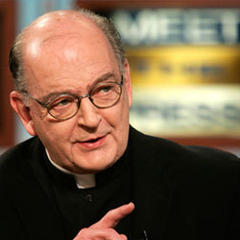
Richard John Neuhaus

Richard John Neuhaus (May 14, 1936 - January 8, 2009) was an influential American writer, theologian, and public intellectual. His commentary and writing on religious, political, and social issues had a profound impact on American public discourse. more

You May Also Like

“No matter what the storm clouds bring, you can face your pain with courage and hope. For two thousand years ago-six hours, one Friday-Christ firmly planted in bedrock three solid anchor points that we can all cling to. For the heart scarred with futility, that Friday holds purpose. For the life blackened with failure, that Friday holds forgiveness. And for the soul looking into the tunnel of death, that Friday holds deliverance.”

“These criminals represent us. One of them recognized Jesus for who he was and received him; Jesus promised that when he died he would be in heaven with him. The other man rejected Jesus and closed his heart. Unlike the first criminal, when he died he didn't go to heaven. He went to hell. In that sense, these two men on either side of Jesus are just like every person. We either embrace Christ as our Savior and spend eternity with him, or we reject him and say, 'I don't believe it. I'll have nothing to do with.' And these people spend eternity separated from him.”

“The Passion of Christ was an experience which included in itself every experience except sin, of every member of the human race. If one may say this with reverence, the fourteen incidents of the Stations of the Cross show not only the suffering but the Psychology of Christ. Above all, they show, in detail, his way of transforming suffering by love. He shows us, step by step, how that plan of love can be carried out by men, women, and children today, both alone in the loneliness of their individual lives and together in communion with one another.”