“A fondness for power is implanted in most men, and it is natural to abuse it when acquired.”
Quote by Alexander Hamilton
Work
The Works of Alexander Hamilton: Miscellanies, 1774-1789: A full vindication; The farmer refuted; Quebec bill; Resolutions in Congress; Letters from Phocion; New-York Legislature, etc
The Works of Alexander Hamilton is a compilation of Hamilton's diverse writings, offering insight into his political philosophy and his role in shaping the early American government. The collection includes a variety of pieces, such as 'The farmer refuted,' which addresses economic and political issues, and 'Letters from Phocion,' which explores historical and philosophical themes. Additionally, it features Hamilton's work on the Quebec bill and his resolutions in Congress, providing a comprehensive view of his political activities during this period. more
Author
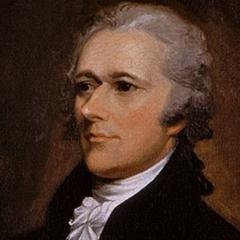
Alexander Hamilton
Alexander Hamilton was a Founding Father of the United States, born on January 11, 1757, and died on July 12, 1804. He played a crucial role in the American Revolutionary War and was instrumental in the drafting of the U.S. Constitution. As the first Secretary of the Treasury, Hamilton promoted fiscal stability and economic growth, establishing the First Bank of the United States and proposing solutions for federal debt. His ideas and policies had a profound impact on the early political and economic development of the United States. more
You May Also Like
“Great Ambition, unchecked by principle, or the love of Glory, is an unruly Tyrant.”
Source: The Works of Alexander Hamilton: Correspondence [contin.] 1795-1804; 1777; 1791. Letters of H. G. 1789. Address to public creditors. 1790. Vindication of funding system. 1791
Source: The Works of Alexander Hamilton
“Ambition without principle never was long under the guidance of good sense.”
Source: The Works of Alexander Hamilton: Correspondence [contin.] 1795-1804; 1777; 1791. Letters of H. G. 1789. Address to public creditors. 1790. Vindication of funding system. 1791
Source: The Federalist, on the new constitution, written in 1788, with an appendix, containing the letters of Pacificus and Helvidius on the proclamation of neutrality of 1793, also the original articles of confederation and the constitution of the United States
Source: The Works of Alexander Hamilton: Correspondence [contin.] 1795-1804; 1777; 1791. Letters of H.G. 1789. Address to public creditors. 1790. Vindication of funding system. 1791
“Take mankind as they are, and what are they governed by? Their passions.”
Source: Jan. 1787-May 1788.-v. 5.June 1778-Nov. 1789.-v. 6. Dec. 1789-Aug. 1790
“The passions of a revolution are apt to hurry even good men into excesses.”
Source: Papers
Source: The Federalist, on the New Constitution, Written in the Year 1788
Source: Citizen Hamilton: The Wit and Wisdom of an American Founder
“Take mankind in general, they are vicious-their passions may be operated upon.”
Source: Jan.1787-May 1788