“The more I read, the more I was led to abhor and detest my enslavers. I could regard them in no other light than a band of successful robbers, who had left their homes, and gone to Africa, and stolen us from our homes, and in a strange land reduced us to slavery. I loathed them as being the meanest as well as the most wicked of men. As I read and contemplated the subject, behold! that very discontentment which Master Hugh had predicted would follow my learning to read had already come, to torment and sting my soul to unutterable anguish. As I writhed under it, I would at times feel that learning to read had been a curse rather than a blessing. It had given me a view of my wretched condition, without the remedy. it opened my eyes to the horrible pit, but to no ladder upon which to get out. in moments of agony, I envied my fellow-slaves for their stupidity. I have often wished myself a beast. I preferred the condition of the meanest reptile to my own. Any thing, no matter what, to get rid of thinking! It was this everlasting thinking of my condition that tormented me. There was no getting rid of it. It was pressed upon me by every object within sight or hearing, animate or inanimate. The silver trump of freedom had roused my soul to eternal wakefulness. Freedom now appeared, to disappear no more forever. It was heard in every sound and seen in every thing. It was ever present to torment me with a sense of my wretched condition. I saw nothing without seeing it, I heard nothing without hearing it, and felt nothing without feeling it. It looked from every star, it smiled in every calm, breathed in every wind, and moved in every storm.”
Quote by Frederick Douglass
Work
This seminal work provides a first-hand account of the hardships and triumphs of Frederick Douglass, a former slave who rose to prominence in the fight against slavery. The narrative covers his early years in bondage, his escape to freedom, and his subsequent journey to becoming a leading figure in the abolitionist movement. more
Author
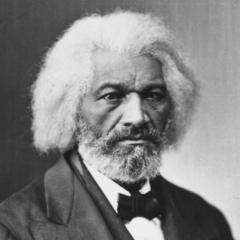
Frederick Douglass was a renowned orator and writer, born into a slave family in Maryland, USA. He gained his freedom in the mid-19th century through self-education and became one of the leaders of the abolitionist movement. Douglass made significant contributions to the cause of equality and justice in the United States through his incisive speeches and writings, which exposed the cruelty of slavery and inspired countless people to join the abolitionist movement. more
You May Also Like
“What's a horizon?' Lazlo asked, straight-faced. 'Is it like the end of an aisle of books?”
“Reading Plato should be easy; understanding Plato can be difficult.”
“I read a lot. I love books. If they came in a bottle, I'd be a drunk too.”