Quotessence
Home / Quotes / Quote by Laozi

Quote by Laozi

“Better stop short than fill to the brim. Oversharpen the blade, and the edge will soon blunt. Amass a store of gold and jade, and no one can protect it.”
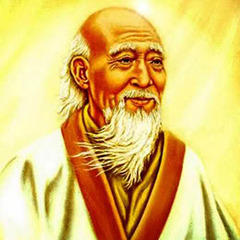
Quote by Laozi

Work

道德经

Composed by Laozi, this ancient Chinese classic is a profound exploration of Taoist philosophy, emphasizing the importance of living in accordance with the Tao, or 'the Way.' It offers insights into the nature of the universe and the path to personal and spiritual fulfillment. more

Author

Laozi
Laozi

Laozi, also known as Lao Dan, was a renowned ancient Chinese philosopher and the founder of the Taoist school of thought. His birth and death dates are approximately 604 BC to 531 BC. Laozi advocated for顺应自然 (yielding to nature) and the principle of non-action (wu wei), which had a profound impact on Chinese philosophy, culture, and politics. more

You May Also Like

“The best athlete wants his opponent at his best. The best general enters the mind of his enemy. The best businessman serves the communal good. The best leader follows the will of the people. All of the embody the virtue of non-competition. Not that they don't love to compete, but they do it in the spirit of play. In this they are like children and in harmony with the Tao.”

“The ancient Masters didn't try to educate the people, but kindly taught them to not-know. When they think that they know the answers, people are difficult to guide. When they know that they don't know, people can find their own way. If you want to learn how to govern, avoid being clever or rich. The simplest pattern is the clearest. Content with an ordinary life, you can show all people the way back to their own true nature.”

“If a country is governed with tolerance, the people are comfortable and honest. If a country is governed with repression, the people are depressed and crafty. When the will to power is in charge, the higher the ideals, the lower the results. Try to make people happy, and you lay the groundwork for misery. Try to make people moral, and you lay the groundwork for vice. Thus the Master is content to serve as an example and not to impose her will. She is pointed, but doesn't pierce. Straightforward, but supple. Radiant, but easy on the eyes.”

“The Tao is the center of the universe, the good man's treasure, the bad man's refuge. Honors can be bought with fine words, respect can be won with good deeds; but the Tao is beyond all value, and no one can achieve it. Thus, when a new leader is chosen, don't offer to help him with your wealth or your expertise. Offer instead to teach him about the Tao. Why did the ancient Masters esteem the Tao? Because, being one with the Tao, when you seek, you find; and when you make a mistake, you are forgiven. That is why everybody loves it.”

“Act without doing; work without effort. Think of the small as large and the few as many. Confront the difficult while it is still easy; accomplish the great task by a series of small acts. The Master never reaches for the great; thus she achieves greatness. When she runs into a difficulty, she stops and gives herself to it. She doesn't cling to her own comfort; thus problems are no problem for her.”