Quotessence
Home / Quotes / Quote by Langston Hughes

Quote by Langston Hughes

“Just because I loves you– That's de reason why Ma soul is full of color Like de wings of a butterfly. Just because I loves you That's de reason why Ma heart's a fluttering aspen leaf When you pass by.”

Quote by Langston Hughes

Author
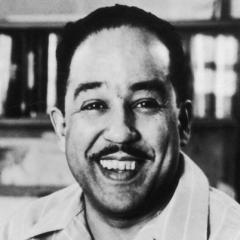
Langston Hughes
Langston Hughes

American poet, writer, playwright, editor, and actor. Langston Hughes is one of the most prominent figures of the Harlem Renaissance, known for his poetry and prose. His works often explore themes of race, class, and identity, and have been beloved by readers. more

You May Also Like

“That which is now called natural philosophy, embracing the whole circle of science, of which astronomy occupies the chief place, is the study of the works of God, and of the power and wisdom of God in his works, and is the true theology. As to the theology that is now studied in its place, it is the study of human opinions and of human fancies concerning God. It is not the study of God himself in the works that he has made, but in the works or writings that man has made; and it is not among the least of the mischiefs that the Christian system has done to the world, that it has abandoned the original and beautiful system of theology, like a beautiful innocent, to distress and reproach, to make room for the hag of superstition.”

“The complete use of pure reason brings us finally from physical to metaphysical knowledge. But the concepts of metaphysical knowledge do not in themselves fully satisfy the demand of our integral being. They are indeed entirely satisfactory to the pure reason itself, because they are the very stuff of its own existence. But our nature sees things through two eyes always, for it views them doubly as idea and as fact and therefore every concept is incomplete for us and to a part of our nature almost unreal until it becomes an experience.”

“If I owe a person money, and cannot pay him, and he threatens to put me in prison, another person can take the debt upon himself, and pay it for me. But if I have committed a crime, every circumstance of the case is changed. Moral justice cannot take the innocent for the guilty even if the innocent would offer itself. To suppose justice to do this, is to destroy the principles of its existence, which is the thing itself. It is then no longer justice. It is indiscriminate revenge. This single reflection will show that the doctrine of redemption is founded on a mere pecuniary idea corresponding to that of a debt which another person might pay; and as this pecuniary idea corresponds again with the system of second redemptions, obtained through the means of money given to the church for pardons, the probability is that the same persons fabricated both the one and the other of those theories; and that, in truth, there is no such thing as redemption; that it is fabulous; and that man stands in the same relative condition with his Maker he ever did stand, since man existed; and that it is his greatest consolation to think so. Let him believe this, and he will live more consistently and morally, than by any other system. It is by his being taught to contemplate himself as an out-law, as an out-cast, as a beggar, as a mumper, as one thrown as it were on a dunghill, at an immense distance from his Creator, and who must make his approaches by creeping, and cringing to intermediate beings, that he conceives either a contemptuous disregard for everything under the name of religion, or becomes indifferent, or turns what he calls devout. In the latter case, he consumes his life in grief, or the affection of it. His prayers are reproaches. His humility is ingratitude. He calls himself a worm, and the fertile earth a dunghill; and all the blessings of life by the thankless name of vanities. He despises the choicest gift of God to man, the GIFT OF REASON; and having endeavored to force upon himself the belief of a system against which reason revolts, he ungratefully calls it human reason, as if man could give reason to himself. Yet, with all this strange appearance of humility, and this contempt for human reason, he ventures into the boldest presumptions. He finds fault with everything. His selfishness is never satisfied; his ingratitude is never at an end. He takes on himself to direct the Almighty what to do, even in the government of the universe. He prays dictatorially. When it is sunshine, he prays for rain, and when it is rain, he prays for sunshine. He follows the same idea in everything that he prays for; for what is the amount of all his prayers, but an attempt to make the Almighty change his mind, and act otherwise than he does? It is as if he were to say - thou knowest not so well as I.”

“By far the highest type of religious thought among the Ancients was that of their philosophers. With Saint Augustine, on the contrary, a new age was beginning, in which by far the highest type of philosophical thinking would be that of the theologians. True enough, even the faith of an Augustinian presupposes a certain exercise of natural reason. We cannot believe something, be it the word of God Himself, unless we find some sense in the formulas which we believe. And it can hardly be expected that we will believe in God's Revelation, unless we be given good reasons to think that such a Revelation has indeed taken place.”