Quotessence
Home / Quotes / Quote by V. S. Naipaul

Quote by V. S. Naipaul

“I often wonder what would have happened to me if I hadn't made that decision. I suppose I would have sunk. I suppose I would have found some kind of hole and tried to hide or pass. After all, we make ourselves according to the ideas we have of our possibilities. I would have hidden in my hole and been crippled by my sentimentality, doing what I was doing, and doing it well, but always looking for the wailing wall. And I would never have seen the world as the rich place that it is. You wouldn't have seen me here in Africa, doing what I do.”

Quote by V. S. Naipaul

Work

A Bend in the River

Published in 1979 by the Nobel laureate V.S. Naipaul, this novel explores the experience of a young Indian man who leaves his home to work in a trading post in a fictional East African country navigating its transition from colonial rule to independence. The protagonist observes the social and political transformations occurring around him as modern influences collide with traditional African life. The narrative examines complex themes including the disruptions of rapid social change, the challenges of building a new nation, and the personal dislocations of those caught between different worlds. The story reflects Naipaul's characteristic nuanced observation of post-colonial societies and the human costs of political idealism colliding with reality. more

Author

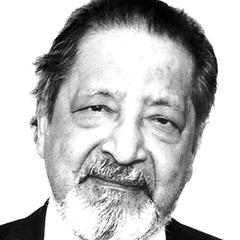
V. S. Naipaul
V. S. Naipaul

V. S. Naipaul, born on August 17, 1932, is a British writer known for his sharp observations and profound insights. His works primarily focus on themes such as colonialism, race, class, and identity, deeply revealing the complexities and contradictions of human society. Naipaul has won the Nobel Prize in Literature and is considered one of the most outstanding writers of the 20th century. more

You May Also Like

“The loss of quality that is so evident at every level of spectacular language, from the objects it glorifies to the behavior it regulates, stems from the basic nature of a production system that shuns reality. The commodity form reduces everything to quantitative equivalence. The quantitative is what it develops, and it can develop only within the quantitative.”

“As long as human labor power, and, consequently, life itself, remain articles of sale and purchase, of exploitation and robbery, the principle of the “sacredness of human life” remains a shameful lie, uttered with the object of keeping the oppressed slaves in their chains.”