Quotessence
Home / Quotes / Quote by Nicole Kidman

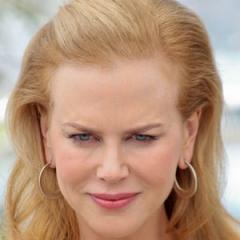
Quote by Nicole Kidman

Author

Nicole Kidman
Nicole Kidman

Nicole Kidman is an Australian actress renowned for her exceptional performances in the film industry. Born on June 20, 1967, she began her acting career in the mid-1980s and gained international recognition with her outstanding performances in various films. Her notable works include 'Moulin Rouge!', 'The Thin Red Line', and 'The Piano'. more

You May Also Like

“The thing about physicists is that they tend to think that everything is physics. I don't. That's not what music is to me. You can explain aspects of it in physical terms, including the physics of anatomy: how our bodies move, the torsional moment of inertia, the way you move your body to a beat, the inherent periodicities of the heartbeat, the gait. That's physics, too, I guess - maybe they'd call it biophysics.”

“Music is made of what we do when we move, and we can only move in certain ways, in certain ranges of tempo because of the inherent constraints that our bodies offer, or you can call them 'affordances' - that's another word for me. It's a little more positive; doesn't make it seem like a limitation, but rather, a set of opportunities. You can say that that's part of music making, but there's also the imagination. The power of the imagination is kind of trumping - sorry to have to use that word.”

“I find myself skeptical of music that forces you to have a certain experience, emotional reaction, or specific constructive arc of experience. But performers should still take care of that, to a certain extent - how does it add up? What you want from performance, because we're all in a room together, is that somehow we've gotten somewhere at the end, together. You could call that a sense of narrative, but it's not so obvious how that happens. One way it happens is by everyone caring about it happening.”

“When I give a concert, I know they're not going to hear everything; there might be a lot going on. My individual perceptual and cognitive path through the music is just that: one path through music. My experience will be probably at some level different from other people's, and that multiplicity of experience has to be supported by the music. I might just focus on the cowbell the whole time - maybe I have a fever for more cowbell!”

“There are records I'll listen to one time and zero in on what's happening, and then I'll listen again to something I didn't notice the first time. The art of making records is something like this: you want to provide a multiplicity of experience in a single object, which is to say you want layers so that people can revisit and have something revealed to them that wasn't apparent the first time. We often will listen to the same music over and over again, and that tells you something, too.”

“What I've learned from my gurus is that when you hear music, you hear a person, or you hear people, and you hear everything about them in those moments. They reveal themselves in ways that cannot be revealed any other way, and it contains historical truths because of that. To me, that is the most important thing. It shouldn't be a footnote, or the last chapter. It should be the complete thesis about a book on listening.”