Quotessence
Home / Quotes / Quote by Stephen King

Quote by Stephen King

Work

Bare bones: conversations on terror with Stephen King

This book features in-depth conversations with the renowned author Stephen King, exploring his perspectives on terror and horror as they manifest in both literature and cinema. The discussions delve into the psychological and thematic aspects of fear, as well as the creative process behind King's iconic works. more

Author
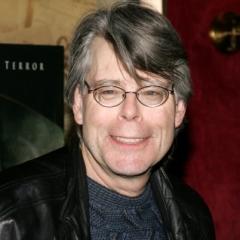
Stephen King
Stephen King

Stephen King, born on September 21, 1947, is a renowned American author. His works primarily focus on horror, fantasy, and science fiction, and have won him a wide audience. King has received numerous literary awards in the United States, including the Edgar Allan Poe Award and the World Fantasy Award. more

You May Also Like

“There is poetry in fiction. If you cannot see it and feel it when you write, you need to step back and examine what you are doing wrong. If you have not figured out how to write a simple declarative sentence and make it sing with that poetry, you are not yet ready to write an entire book.”

“I think my first general rule is that most of my experiences are not that interesting. It's usually other people's experiences. It's not that entirely conscious. Somebody tells me a story or, you know, repeats an anecdote that somebody else told them and I just feel like I have to write it down so I don't forget - that means for me, something made it fiction-worthy. Interesting things never happen to me, so maybe two or three times when they do, I have to use them, so I write them down.”

“Honestly, when you start talking about genres, you're talking as much about the business side of writing as anything else. Certainly there are elements of reader expectation that play into various genres, and those are important, but it also becomes about packaging, placement, audience....In the end, I'm not a fan of labels. I think the best fiction blurs the boundaries between genres, stretches and breaks them.”

“A woman journalist in England asked me why Americans usually wrote about their childhood and a past that happened only in imagination, why they never wrote about the present. This bothered me until I realized why - that a novelist wants to know how it comes out, that he can't be omnipotent writing a book about the present, particularly this one.”