“Thousands of people are being buried and no one attends the funerals,' said one of the soldiers. 'In peacetime it's the other way round: one coffin and a hundred people carrying flowers.”
Quote by Vasily Grossman
Work
Life And Fate (Vintage Classic Russians Series)
This novel delves into the lives of various characters, illustrating the impact of historical events on ordinary people. It encompasses a wide range of themes, including political intrigue, personal sacrifice, and the struggle for survival in a time of war and upheaval. more
Author
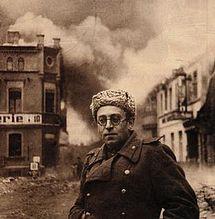
Vasily Grossman
Vasily Grossman (December 12, 1905 – September 14, 1964) was a Soviet Jewish writer and journalist, best known for his works on World War II. Born in Berdychiv, Ukraine, he initially studied chemical engineering before turning to literature. As a war correspondent for the Red Star newspaper, he witnessed the Battle of Stalingrad and documented Nazi atrocities. His masterpiece, Life and Fate, was banned by Soviet authorities for its criticism of Stalinism and only published in the 1980s. Grossman's works explore themes of war, totalitarianism, and humanity, earning him recognition as a significant voice in 20th-century Russian literature. more
You May Also Like
Source: Life And Fate (Vintage Classic Russians Series)
Source: Life And Fate (Vintage Classic Russians Series)
“All that I am hangs by a thread tonight”
Source: Избранные Стихи
“This Cruel Age has deflected me.”
Source: Избранные Стихи
Source: Избранные Стихи
“The turning point really is just knowing you're an imbecile.”