“An allopath comes and treats cholera patients and gives them his medicines. The Homeopath comes and gives his medicines and cures perhaps more than the allopath does because the Homoeopath does not disturb the patients but allows the nature to deal with them.”
Quote by Swami Vivekananda
Author
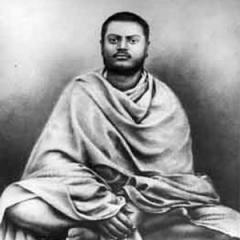
Swami Vivekananda
Swami Vivekananda (January 12, 1863 – July 4, 1902) was an Indian Hindu monk, philosopher, and social reformer. Born as Narendranath Datta in Kolkata, he was a chief disciple of the mystic Ramakrishna. He is best known for his historic speech at the 1893 Parliament of the World's Religions in Chicago, where he introduced Hinduism to the Western world. He founded the Ramakrishna Mission in 1897, focusing on social service, education, and interfaith harmony. His teachings emphasized self-realization, service to humanity, and the unity of all religions. He wrote extensively on yoga and Vedanta philosophy, influencing global spirituality and Indian nationalism. He died at the age of 39, leaving a lasting legacy as a bridge between Eastern and Western thought. more
You May Also Like
“What is my loftiest ambition? I've always wanted to throw an egg at an electric fan.”
“To like things like, whatever one may ail; There is certain help.”
“Homeopathy for me are effective natural remedies that have no side effects.”
“The better you feel about money, the more money you magnetize to yourself.”
Source: The Power
Source: The Power
Source: Miscellaneous Works: Scientific memoirs