Quotessence
Home / Quotes / Quote by Samuel R. Delany

Quote by Samuel R. Delany

“But the strange thing, the thing that you can never explain to anyone, except another nut, or, if you're lucky, a doctor who has an unusual amount of sense-stranger than the hallucinations, or the voices, or the anxiety-is the way you begin to experience the edges of the mind itself... in a way other people just can't.”

Quote by Samuel R. Delany

Author
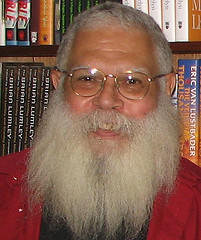
Samuel R. Delany
Samuel R. Delany

Samuel R. Delany is an American author renowned for his science fiction and fantasy novels. His works are celebrated for their complex narrative structures, profound social commentary, and exploration of gender. Born on April 1, 1942, Delany's writing career spans several decades, and he has had a significant impact on contemporary literature. more

You May Also Like

“Another thirst had come to him—the thirst for women, for licentious pleasure, and all that Parisian life permitted him to enjoy. He felt somewhat stunned, like a man coming out of a ship, and in the visions that haunted his first sleep, he saw the shoulders of the fishwife, the loins of the 'longshorewoman, the calves of the Polish lady, and the head-dress of the female savage flying past him and coming back again continually. Then, two large black eyes, which had not been at the ball, appeared before him; and, light as butterflies, burning as torches, they came and went, ascended to the cornice and descended to his very mouth. Frederick made desperate efforts to recognise those eyes, without succeeding in doing so. But already the dream had taken hold of him. It seemed to him that he was yoked beside Arnoux to the pole of a hackney-coach, and that the Maréchale, astride of him, was disembowelling him with her gold spurs.(©Project Gutenberg)”

“Note for a moment do I take you for a truth that is real,' Ivan exclaimed in what even amounted to fury. 'You are a falsehood, you are my illness, you are a ghost. Only I do not know how to destroy you, and perceive that for a certain time I must suffer you. You are a hallucination I am having. You are the embodiment of myself, but only of one side of me ... of my thoughts and emotions, though only those that are most loathsome and stupid. In that regard you might even be of interest to me, if only I had time to throw away on you ...”

“At this point, the sequence of my memories is disrupted. I sank into a chaos of brief, incoherent and bizarre hallucinations, in which the grotesque and the horrible kept close company. Prostrate, as if I were being garrotted by invisible cords, I floundered in anguish and dread, oppressively ridden by the most unbridled nightmares. A whole series of monsters and avatars swarmed in the shadows, coming to life amid draughts of sulphur and phosphorus like an animated fresco painted on the moving wall of sleep. There followed a turbulent race through space. I soared, grasped by the hair by an invisible hand of will: an icy and powerful hand, in which I felt the hardness of precious stones, and which I sensed to be the hand of Ethal. Dizziness was piled upon dizziness in that flight to the abyss, under skies the colour of camphor and salt, skies whose nocturnal brilliance had a terrible limpidity. I was spun around and around, in bewildering confusion, above deserts and rivers. Great expanses of sand stretched into the distance, mottled here and there by monumental shadows. At times we would pass over cities: sleeping cities with obelisks and cupolas shining milk-white in the moonlight, between metallic palm-trees. In the extreme distance, amid bamboos and flowering mangroves, luminous millennial pagodas descended towards the water on stepped terraces.”

“He had entered another imaginative world, one connected to the beginning of his life as a writer, to the Napoleonic world that had been a lifelong metaphor for the power of art, for the empire of his own creation He began to dictate notes for a new novel, "fragments of the book he imagines himself to be writing." As if he were now writing a novel of which his own altered consciousness was the dramatic center, he dictated a vision of himself as Napoleon and his own family as the Imperial Bonapartes....William and Alice he grasped with his regent hand, addressing his 'dear and most esteemed brother and sister.' To them, to whom he had granted countries, he now gave the responsibility of supervising the detailed plans he had created for 'the decoration of certain apartments, here of the Louvre and Tuileries, which you will find addressed in detail to artists and workment who take them in hand.' He was himself the 'imperial eagle.' Taking down the dictation, Theodora [his secretary] felt it to be almost more than she could bear. 'It is a heart-breaking thing to do, though, there is the extraordinary fact that his mind does retain the power to frame perfectly characteristic sentences.”