“To what end does one liberate one's country if afterward there is no meaningful goal in life, no goal for which it is worthwhile to be free? If a person no longer finds any meaning in their life, it makes no difference whether they waste away under a communist or a capitalist regime. Only if they can use their freedom to create something meaningful is it relevant that they should be free. That is why finding the inner meaning of life is more important to the individual than anything else, and why the process of individuation must be given priority.”
Quote by Marie-Louise von Franz
Author
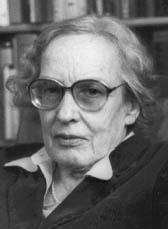
Marie-Louise von Franz
Marie-Louise von Franz was a Swiss psychologist born on January 4, 1915, and died on February 17, 1998. She was a colleague and close friend of the famous psychologist Carl Jung, known for her contributions to Jungian psychology. more
You May Also Like
Source: Ritual in Human Evolution and Religion: Psychological and Ritual Resources
Source: Ritual in Human Evolution and Religion: Psychological and Ritual Resources
Source: Ritual in Human Evolution and Religion: Psychological and Ritual Resources
Source: A Happy Ghost
“I think silence is too often confused with strength, with power.”
Source: The Rescue
Source: Mere Christianity
“Government is never the solution, but it is almost always the problem. - Quicksilver”
Source: Morning Star