“May I deem the wise man rich, and may I have such a portion of gold as none but a prudent man can either bear or employ.”
Quote by Plato
Work
The Works of Plato: A New and Literal Version, Chiefly from the Text of Stallbaum
This extensive collection presents the philosophical writings of the ancient Greek thinker Plato, translated directly into English with a distinct focus on maintaining strict fidelity to the original Greek syntax and vocabulary. The translation is heavily grounded in the foundational textual scholarship and critical editions prepared by the nineteenth-century philologist Gottfried Stallbaum. Designed to provide English-speaking audiences with a highly accurate and accessible rendering of Platonic philosophy, this edition purposefully avoids interpretive paraphrasing. Instead, it employs a precise, word-for-word translation methodology intended to preserve the exact meaning and structural integrity of the original classical texts. more
Author
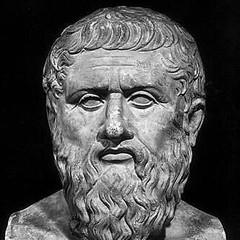
Plato
Plato (428 BC - 348 BC) was a prominent Greek philosopher, one of the most influential figures in Western philosophy. He founded the Academy, which was the first institution of higher education in the Western world. Plato's philosophy, centered around the theory of Forms, emphasized the importance of reason and morality. more
You May Also Like
Source: Wit and Wisdom of Socrates, Plato, Aristotle: Being a Treasury of Thousands of Glorious, Inspiring and Imperishable Thoughts, Views and Observations of the Three Great Greek Philosophers, Classified Under about Four Hundred Subjects for Comparative Study
“All things are in fate, yet all things are not decreed by fate.”
Source: Wit and Wisdom of Socrates, Plato, Aristotle: Being a Treasury of Thousands of Glorious, Inspiring and Imperishable Thoughts, Views and Observations of the Three Great Greek Philosophers, Classified Under about Four Hundred Subjects for Comparative Study
“Believers, look up - take courage. The angels are nearer than you think.”
Source: Angels: Ringing Assurance that We Are Not Alone
“Some thoughtlessly proclaim the Muses nine: A tenth is Sappho, maid divine.”
Source: The Republic
Source: The Works of Plato: Philebus, Charmides, Laches, Menexenus, Hippias major, Hippias minor, Ion, First Alcibiades, Second Alcibiades, Theages, The rivals, Hipparchus. Minos, Clitopho, The epistles
Source: Laws
“Man is the plumeless genus of bipeds, birds are the plumed.”
Source: Wit and Wisdom of Socrates, Plato, Aristotle: Being a Treasury of Thousands of Glorious, Inspiring and Imperishable Thoughts, Views and Observations of the Three Great Greek Philosophers, Classified Under about Four Hundred Subjects for Comparative Study
“When man is not properly trained, he is the most savage animal on the face of the globe.”
Source: Wit and Wisdom of Socrates, Plato, Aristotle: Being a Treasury of Thousands of Glorious, Inspiring and Imperishable Thoughts, Views and Observations of the Three Great Greek Philosophers, Classified Under about Four Hundred Subjects for Comparative Study