“In making up my mind as to what Mr. Lincoln really believed, I do not take into consideration the evidence of unnamed persons or the contents of anonymous letters; I take the testimony of those who knew and loved him, of those to whom he opened his heart and to whom he spoke in the freedom of perfect confidence.”
Quote by Robert Green Ingersoll
Work
Ingersoll: Fifty Great Selections, Lectures, Tributes, After Dinner Speeches and Essays, Carefully Selected from the Twelve Volume Dresden Edition of Colonel Ingersoll's Complete Works
In this compilation, readers are introduced to a variety of Ingersoll's writings, spanning lectures, tributes, after dinner speeches, and essays. The selections are drawn from the extensive twelve-volume Dresden Edition of Ingersoll's Complete Works, showcasing his diverse range of topics and persuasive oratory style. more
Author
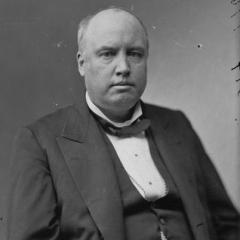
Robert Green Ingersoll
Robert Green Ingersoll was a prominent lawyer, orator, and freethinker. Born on August 11, 1833, and died on July 21, 1899, he was one of the most celebrated orators in 19th-century America. Known for his criticism of religion and government, Ingersoll was a leading advocate for individual freedom. more
You May Also Like
“Mr. Lincoln had no hope, and no faith, in the usual acceptation of those words.”
Source: Writings
Source: Selected Writings of James Madison
Source: Selected Writings of James Madison
Source: Writings