Quotessence
Home / Quotes / Quote by Cormac McCarthy

Quote by Cormac McCarthy

“He spoke of his campaigns in the deserts of Mexico and he told them of horses killed under him and he said that the souls of horses mirror the souls of men more closely than men suppose and that horses also love war. Men say they only learn this but he said that no creature can learn that which his heart has no shape to holo”

Quote by Cormac McCarthy

Work

All the Pretty Horses

Cormac McCarthy's All the Pretty Horses is a compelling narrative that follows a young cowboy's journey across the Texas landscape, delving into the complexities of growing up and the pursuit of self-discovery. more

Author
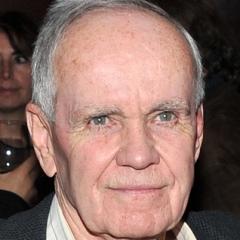
Cormac McCarthy
Cormac McCarthy

American novelist known for his profound literary style and rich imagination. His notable works include 'The Border Trilogy' and 'No Country for Old Men'. more

You May Also Like

“He rose and turned toward the lights of town. The tidepools bright as smelterpots among the dark rocks where the phosphorescent seacrabs clambered back. Passing through the salt grass he looked back. The horse had not moved. A ship's light winked in the swells. The colt stood against the horse with its head down and the horse was watching, out there past men's knowing, where the stars are drowning and whales ferry their vast souls through the black and seamless sea.”

“The night is quiet. Like a camp before battle. The city beset by a thing unknown and will it come from forest or sea? The murengers have walled the pale, the gates are shut, but lo the thing's inside and can you guess his shape? Where he's kept or what's the counter of his face? Is he a weaver, bloody shuttle shot through a time warp, a carder of souls from the world's nap? Or a hunter with hounds or do bone horses draw his dead cart through the streets and does he call his trade to each? Dear friend he is not to be dwelt upon for it is by just such wise that he's invited in”

“A thousand acres that can feed a thousand souls is better than ten thousand acres of no more effect.”

“He imagined the pain of the world to be like some formless parasitic being seeking out the warmth of human souls wherein to incubate and he thought he knew what made one liable to its visitations. What he had not known was that it was mindless and so had no way to know the limits of those souls and what he feared was that there might be no limits.”