“And last of all we have the secondary forms of crystals bursting in upon us, and sparkling in the rigidity of mathematical necessity and telling us, neither of harmony of design, usefulness or moral significance, nothing but spherical trigonometry and Napier's analogies. It is because we have blindly excluded the lessons of these angular bodies from the domain of human knowledge that we are still in doubt about the great doctrine that the only laws of matter are those which our minds must fabricate, and the only laws of mind are fabricated for it by matter.”
Quote by James Clerk Maxwell
Work
The Scientific Letters and Papers of James Clerk Maxwell: 1846-1862
The book includes a comprehensive selection of Maxwell's scientific correspondence and papers, offering insights into his contributions to electromagnetism and other scientific disciplines during the specified period. more
Author
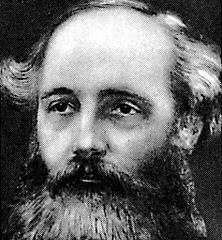
James Clerk Maxwell
James Clerk Maxwell was an outstanding physicist known for his contributions to the field of electromagnetism. He formulated Maxwell's equations, which describe the properties of electromagnetic fields and predict the existence of electromagnetic waves. Maxwell's work has had a profound impact on modern physics and engineering. more
You May Also Like
Source: A Treatise on Electricity and Magnetism
Source: The Scientific Letters and Papers of James Clerk Maxwell: 1846-1862
Source: The Scientific Letters and Papers of James Clerk Maxwell:
Source: The Scientific Letters and Papers of James Clerk Maxwell:
“I think that our American people will welcome a Russian military force for peace-keeping purposes.”
“Baby bye Here's a fly, Let us watch him. you and I, How he crawls Up the walls Yet he never falls.”
Source: THE SEXTON'S TALE, AND OTHER POEMS