“Man is the only animal who does not feel at home in nature, who can feel evicted from paradise, the only animal for whom his own existence is a problem that he has to solve and from which he cannot escape. He cannot go back to the prehuman state of harmony with nature, and he does not know where he will arrive if he goes forward. Man's existential contradiction results in a state of constant disequilibrium. This disequilibrium distinguishes him from the animal, which lives, as it were, in harmony with nature.”
Quote by Erich Fromm
Work
The Anatomy of Human Destructiveness
This book delves into the complex origins of destructive behavior, exploring various theories and case studies to provide a nuanced understanding of the human capacity for destructiveness. more
Author
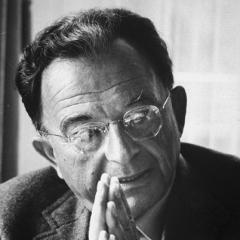
Erich Fromm
Erich Fromm, born on March 23, 1900 in Germany and died on March 18, 1980, was a renowned psychologist. His research covered a wide range of fields including anthropology, philosophy, and religion, particularly known for his studies on human psychology and interpersonal relationships. more
You May Also Like
Source: Man for Himself: An Inquiry Into the Psychology of Ethics
“The right to express our thoughts means something only if we are able to have thoughts of our own”
Source: Escape from Freedom
Source: The Plays of Oscar Wilde
“I am Irish by race but the English have condemned me to talk the language of Shakespeare.”