Quotessence
Home / Quotes / Quote by Margaret Forster

Quote by Margaret Forster

Work

Hidden Lives: A Family Memoir

Browse quotes and source details for this work. more

Author
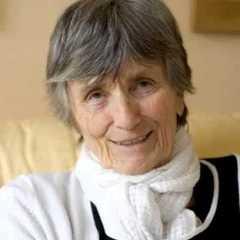
Margaret Forster
Margaret Forster

Margaret Forster was an English author renowned for her biographical works. Her writing is celebrated for its delicate touch and profound psychological insights into characters. Her career spanned various literary genres, including novels, biographies, and children's literature. more

You May Also Like

“Locked up inside her was an uncomfortable amount of unhappiness, perhaps even horror, if of a sadly conventional kind, and the only way she could deal with it was by pretending it never existed - so much pretending women like my grandmother had to do. The urge in her to be respectable and above reproach was so strong, and the rules of that respectability so rigid, that it overrode all other desires.”

“To this end, Argentinian feminist anthropologist Rita Segato (2015) introduces a distinction between the “world-village” (mundo-aldea) of communal worlds, with their dual-gender ontology (based on complementary dualities, organized on the basis of relations of reciprocity, and not on a binary between intrinsically independent pairs), and the “world-state,” with its dualist ontologies, which progressively occupies communal worlds through the constitution of a public sphere dominated by men and an increasingly subordinated feminine private sphere. It was thus that the low-intensity patriarchies of communal worlds gave way to what Segato calls the high-intensity patriarchy of capitalist modernity. From this perspective, patriarchy is at the root of all forms of subordination, including racial, colonial, and imperial domination, along with the resulting pedagogy of cruelty, as Segato names it, imposed on all societies. There is agreement among the growing cadre of Latin American autonomous, decolonial, and communitarian feminists, as Aymara intellectual-activist Julieta Paredes (2012) puts it, that it was on the bodies of women that humanity learned how to dominate. The corollary is to always analyze historically the entanglement of diverse forms of patriarchy, from the autochthonous and indigenous to the modern.”