Quotessence
Home / Quotes / Quote by Michael Pollan

Quote by Michael Pollan

“To grow the plants and animals that made up my meal, no pesticides found their way into any farmworker’s bloodstream, no nitrogen runoff or growth hormones seeped into the watershed, no soils were poisoned, no antibiotics were squandered, no subsidy checks were written. If the high price of my all-organic meal is weighed against the comparatively low price it exacted from the larger world, as it should be, it begins to look, at least in karmic terms, like a real bargain.”

Quote by Michael Pollan

Work

The Omnivore's Dilemma: A Natural History of Four Meals

Michael Pollan investigates the complex relationships between food, culture, and the environment through an in-depth analysis of the ingredients and processes involved in four distinct meals. The book delves into the history, science, and ethics of food production, offering a critical examination of the modern food system and its impact on health, sustainability, and society. more

Author
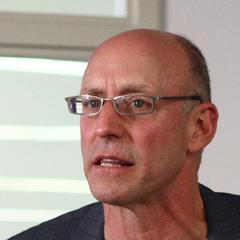
Michael Pollan
Michael Pollan

Michael Pollan is an American author renowned for his insightful views on food, agriculture, and culture. His work explores the impact of the modern food industry on health, the environment, and society, as well as the necessity of sustainable food systems. more

You May Also Like

“He said wouldn't it be brilliant to have a food emporium on the ground floor of Fenton's, like Harrods, but have everything organic and locally grown." Diana paused to let the idea sink in. "I said not the ground floor of course, Fenton's isn't a supermarket, but the basement has been a dead zone for years. A whole floor dedicated to stationery when no one writes letters anymore." "A food emporium," Cassie repeated. "Fresh fish caught in the bay, oysters, crab when it's in season. Counters of vegetables you only find in the farmers market, those cheeses they make in Sonoma that smell so bad they taste good. Wines from Napa Valley, Ghirardelli chocolates, sourdough bread, sauces made by Michael Mina and Thomas Keller. Everything locally produced. And maybe a long counter with stools so you could sample bread and cheese, cut fruit, sliced vegetables. Not a true cafe because we'd keep the one on the fourth floor. It would have more the feel of a food bazaar, with the salespeople wearing aprons and white caps." Cassie closed her eyes and saw large baskets of vegetables, glass cases filled with goat cheese and baguettes, stands brimming with chocolate-covered strawberries.”

“For the sake of farmed animals, who suffer terribly in their artificially short lives, please do not reject red flesh in preference for poultry flesh. Please do not replace flesh with eggs or dairy products. Please do not buy animal products that try to disguise cruel exploitation behind meaningless feel-good labels such as “free range,” “cruelty free,” “organic,” and “natural.” For the sake of your own health, and for the sake of farmed animals, please eliminate (or at least reduce) your consumption of all animal products.”

“There is no requirement that the cows, pigs, or hens who were exploited to create “natural” products be treated any different from how other factory farmed animals are treated. Farmed animals who are exploited for “natural” products are not allowed to live in natural conditions—they are not even allowed to satisfy their most basic natural behaviors.”

“she could sell in the café provisions she baked in her own time with a shelf life longer than pastries. When she thought of it there had been a rush of certainty she could do it, and a prickling of pride in having conceived a way to make money on her own. It would double at least what she was making now. Without Nicholas it might never had occurred to her. The other day he had stuck a label, which he had found in the junk drawer, on a plastic-wrapped loaf of banana bread. He wrote on the label with a marker, "From the Summer Kitchen Bakery." She had found the gesture adorable at the time and hugged him, but something about it had evidently started percolating in the recesses of her mind, and now she was lapping at the brew like someone tasting it for the first time and wondering how she had never before tasted such ambition. She was thinking of cellophane-packaged chocolate brownies and caramel blondies and orange-and-almond biscotti and pear and oat slices and butter shortbread and Belgian chocolate truffles, marmalades, chutney, relishes, and jellies beautified in jars with black-and-white gingham hats and black-and-white ribbon tied above skirted brims. She could even sell a muesli mix she had developed, full of organic cranberries and nuts and the zest of unwaxed lemons. And she wouldn't change Nicholas's label at all. A child's handwriting impressed that the goods were homemade. She would have his design printed professionally, in black and white, too, old world, like the summer kitchen itself.”

“I might seem like the ideal student: homework always in early, every extra credit and extracurricular I can get my hands on, the good girl and the high achiever. But I realized something just now: it’s not ambition, not entirely. It’s fear. Because I don’t know who I am when I’m not working, when I’m not focused on or totally consumed by a task. Who am I between the projects and the assignments, when there’s nothing to do? I haven’t found her yet and it scares me.”