Quotessence
Home / Quotes / Quote by George R. R. Martin

Quote by George R. R. Martin

“And if I'm guilty of having gratuitous sex, then I'm also guilty of having gratuitous violence, and gratuitous feasting, and gratuitous description of clothes, and gratuitous heraldry, because very little of this is necessary to advance the plot. But my philosophy is that plot advancement is not what the experience of reading fiction is about. If all we care about is advancing the plot, why read novels? We can just read Cliffs Notes. A novel for me is an immersive experience where I feel as if I have lived it and that I've tasted the food and experienced the sex and experienced the terror of battle. So I want all of the detail, all of the sensory things—whether it's a good experience, or a bad experience, I want to put the reader through it. To that mind, detail is necessary, showing not telling is necessary, and nothing is gratuitous.”

Quote by George R. R. Martin

Author
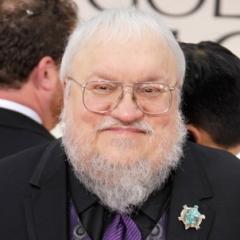
George R. R. Martin
George R. R. Martin

George R. R. Martin is an American novelist, best known for his epic fantasy works, particularly the 'A Song of Ice and Fire' series. His novels have gained widespread acclaim for their rich world-building, complex characters, and gripping narrative. The series has been adapted into the popular television show 'Game of Thrones'. more

You May Also Like

“A star falls from the sky and into your hands. Then it seeps through your veins and swims inside your blood and becomes every part of you. And then you have to put it back into the sky. And it's the most painful thing you'll ever have to do and that you've ever done. But what's yours is yours. Whether it’s up in the sky or here in your hands. And one day, it'll fall from the sky and hit you in the head real hard and that time, you won't have to put it back in the sky again.”

“While reading, we can leave our own consciousness, and pass over into the consciousness of another person, another age, another culture. "Passing over," a term used by the theologian John Dunne, describes the process through which reading enables us to try on, identify with, and ultimately enter for a brief time the wholly different perspective of another person's consciousness. When we pass over into how a knight thinks, how a slave feels, how a heroine behaves, and how an evildoer can regret or deny wrongdoing, we never come back quite the same; sometimes we're inspired, sometimes saddened, but we are always enriched. Through this exposure we learn both the commonality and the uniqueness of our own thoughts -- that we are individuals, but not alone.”

“A deaf composer's like a cook who's lost his sense of taste. A frog that's lost its webbed feet. A truck driver with his license revoked. That would throw anybody for a loop, don't you think? But Beethoven didn't let it get to him. Sure, he must have been a little depressed at first, but he didn't let misfortune get him down. It was like, Problem? What problem? He composed more than ever and came up with better music than anything he'd ever written. I really admire the guy. Like this Archduke Trio--he was nearly deaf when he wrote it, can you believe it? What I'm trying to say is, it must be tough on you not being able to read, but it's not the end of the world. You might not be able to read, but there are things only you can do. That's what you gotta focus on--your strengths. Like being able to talk with the stone.”

“Without knowing it, the adults in our lives practiced a most productive kind of behavior modification. After our chores and household duties were done we were give "permission" to read. In other words, our elders positioned reading as a privilege - a much sought-after prize, granted only to those goodhardworkers who earned it. How clever of them.”

“I was there to get a Ph.D. in English literature. That's not true. I was there to read a lot of books and to discuss them with bright, insightful, book-loving people, an expectation that I pretty quickly learned was about as silly as it could be. Certainly there were other people who loved books, I'm sure there were, but whoever had notified them ahead of time that loving books was not the point, was, in fact, a hopelessly counterproductive and naive approach to the study of literature, neglected to notify me. It turned out that the point was to dissect a book like a fetal pig in biology class or to break its back with a single sentence or to bust it open like a milkweek pod and say, "See? All along it was only fluff," and then scatter it into oblivion with one tiny breath.”