“It is much easier to suppress a first desire than to satisfy those that follow.”
Quote by Benjamin Franklin
Work
Practical Morality; Or, A Guide to Men and Manners: Consisting of Lord Chesterfield's Advice to His Son. To which is Added, a Supplement Containing Extracts from Various Books, Recommended by Lord Chesterfield to Mr. Stanhope. Together with the Polite Philosopher; Or, An Essay on the Art which Makes a Man Hapopy in Himself, and Agreeable to Others; Dr. Blair's Advice to Youth; Dr. Fordyce on Honour as a Principle; Lord Burghley's Ten Percepts to His Son; Dr. Franklin's Way to Wealth; and Pope's Universal Prayer
This book is a collection of moral and philosophical wisdom, drawn from a variety of sources. It includes Lord Chesterfield's advice to his son, extracts from books recommended by Lord Chesterfield to Mr. Stanhope, and additional essays and treatises by renowned thinkers. The content covers topics such as ethics, personal conduct, the nature of happiness, and the principles of honor. The works of Dr. Blair, Dr. Fordyce, Lord Burghley, Dr. Franklin, and Pope are featured, providing a diverse range of perspectives on moral philosophy and practical advice for living a virtuous life. more
Author
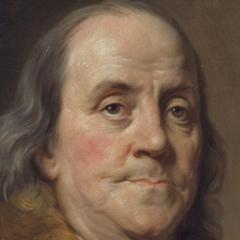
Benjamin Franklin
Benjamin Franklin was a prominent figure in American history, serving as one of the Founding Fathers of the United States. He was a statesman, scientist, inventor, and writer, born on January 17, 1706, and died on April 17, 1790. Franklin is renowned for his contributions to electricity, his support for the American colonial independence movement, and his successful diplomatic efforts in France. more
You May Also Like
Source: Man: The Image of God
“Observe all men, thyself most.”
Source: Poor Richard's Almanack
Source: Applied Software Measurement: Assuring Productivity and Quality
Source: Assessment and Control of Software Risks