Quotessence
Home / Quotes / Quote by Jarvis Cocker

Quote by Jarvis Cocker

Author

Jarvis Cocker
Jarvis Cocker

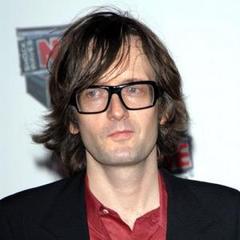
Jarvis Cocker is a British musician born in September 1963. He is best known as the lead singer and lyricist of the band Pulp, whose music style blends rock, pop, and indie elements. Cocker is recognized for his distinctive voice and sense of humor, making him a significant figure in the British music scene. more

You May Also Like

“So let us decide whether you want a shelter, a safety zone, which will no longer yield conflict, whether you want to escape from the present conflict to enter a condition in which there shall be no conflict; or whether you are unaware, unconscious of this conflict in which you exist. If you are unconscious of the conflict, that is, the battle that is taking place between that self and the environment, if you are unconscious of that battle, then why do you seek further remedies? Remain unconscious.”

“When you plant lettuce, if it does not grow well, you don't blame the lettuce. You look for reasons it is not doing well. It may need fertilizer, or more water, or less sun. You never blame the lettuce. Yet if we have problems with our friends or family, we blame the other person. But if we know how to take care of them, they will grow well, like the lettuce. Blaming has no positive effect at all, nor does trying to persuade using reason and arguments. That is my experience. No blame, no reasoning, no argument, just understanding.”

“Our own theory is that sin was ordained only in view of redemption, and that accordingly redemption shows forth as the gain bound up with sin; in comparison with which there can be no question whatever of mischief due to sin, for the merely gradual and imperfect unfolding of the power of the God-consciousness is one of the necessary conditions of the human stage of existence.”

“I suggest that just as self-consciousness is the goal for all the subhuman forms of life, and as group consciousness, or the consciousness of the Heavenly Man, is the goal for the human being, so for him, also, there may be a goal, and for him the achievement may be the development of God consciousness.”