“Every one of the constituent elements of a social group, in a modern city as in a savage tribe, is born immature, helpless, without language, beliefs, ideas, or social standards. Each individual, each unit who is the carrier of the life-experience of his group, in time passes away. Yet the life of the group goes on.”
Quote by John Dewey
Work
Democracy And Education
This seminal work delves into the intersection of democracy and education, examining how democratic principles can influence and be influenced by educational institutions and curricula. The author critically analyzes the historical and contemporary aspects of democratic education, offering insights into the development of democratic societies through education. more
Author
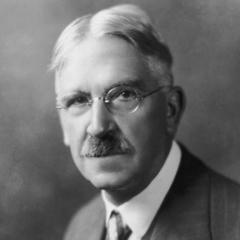
John Dewey
John Dewey was an American philosopher and educator, born on October 20, 1859, and died on June 1, 1952. He was a leading figure in the philosophy of pragmatism and had a profound impact on 20th-century education, philosophy, and the social sciences. more
You May Also Like
Source: Democracy And Education
Source: Democracy and Education - An Introduction to the Philosophy of Education
Source: Democracy And Education
“One globe seemed all too small for the youthful Alexander.”
Source: The Sixteen Satires
Source: Democracy And Education
Source: Democracy And Education
Source: Democracy And Education
Source: Democracy and Education - An Introduction to the Philosophy of Education
Source: Democracy And Education
Source: Democracy And Education