Quotessence
Home / Quotes / Quote by Martin Luther King, Jr.

Quote by Martin Luther King, Jr.

Work

The Wisdom of Martin Luther King, Jr

This work presents the philosophical and ethical teachings of Martin Luther King Jr., the Baptist minister and civil rights leader who became a symbol of the movement for racial equality in the United States. Through his sermons, speeches, and writings, the volume explores principles of nonviolence, justice, and human dignity that defined King's approach to social change. The compilation draws from his profound speeches including the historic 'I Have a Dream' address delivered during the 1963 March on Washington, as well as his Nobel Peace Prize acceptance remarks and pastoral letters. King's commitment to Christian love and nonviolent resistance serves as the moral foundation for the teachings gathered in this collection, offering readers insight into the spiritual and ethical framework that guided his quest for civil rights and equality. more

Author
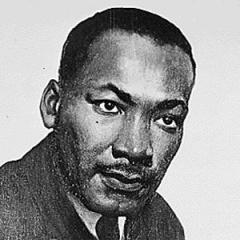
Martin Luther King, Jr.

Martin Luther King Jr. was an American civil rights activist known for his nonviolent protest and advocacy for equal rights. His 'I Have a Dream' speech at the Lincoln Memorial in 1963 became a significant milestone in the American civil rights movement. more

You May Also Like

“The desire for story is very, very deep in human beings. We are the only creature in the world that does this; we are the only creature that tells stories, and sometimes those are true stories and sometimes those are made up stories. Then there are the larger stories, the grand narratives that we live in, which are things like nation and family and clan and so on. Those stories are considered to be treated reverentially. They need to be part of the way in which we conduct the discourse of our lives and to prevent people from doing something very damaging to human nature.”

“One of the problems of truth being censored for a really long time is that people lose the ability to intuit what truth might be, and therefore begin to swallow whatever they're fed. I think that's something that the Chinese have learned very well. They've even managed to persuade quite large segments of the population that the martyrs of Tiananmen were actually an anti-national element. People don't view them as heroes, they see them as troublemakers. There you have a combination of censorship of truth creating a new truth, which is the lie, but it's not seen as such.”

“In our time, we have become too interested in the artist and his or her character and experience as a way of understanding art. In my view, you should be able to read a book or see a film without knowing a single thing about conditions or circumstances or character of the artist, and experience the work to the full without such information. Sometimes I feel - speaking for myself - that people know much too much about me, and I wish people knew less and could just read these books and respond to them purely as words on a page.”

“It's difficult not to color our perception of author's product with his personality. There are so many examples of this. What do we think of Ezra Pound - clearly a great poet and clearly kind of an asshole? You can say the same thing about Louis-Ferdinand Céline, who clearly was a Nazi sympathizer, and yet one of the great writers of the 20th century. It is tough, but there are enough examples around where we have to somehow find a way of separating the work from the artist and seeing what there is to see in the work, while also condemning the thoughts we see in the man.”

“I've heard the government say many nice things. But it did make some gestures, like writing human rights protection into the constitution - that surprised me. And it improved the conditions for foreign journalists: It used to be impossible for you to meet with me personally. But there still hasn't been a real improvement in the human rights situation.”