“If you sat with a pencil and jotted down all the decisions you've taken in the past week, or, if you could, over your lifetime, you would realize that almost all of them have had asymmetric payoff, with one side carrying a larger consequence than the other. You decide principally based on fragility, not probability. Or to rephrase, You decide principally based on fragility, not so much on True/False.”
Quote by Nassim Nicholas Taleb
Author
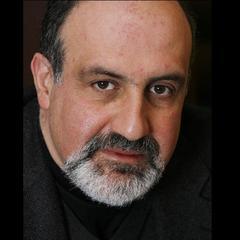
Nassim Nicholas Taleb
Nassim Nicholas Taleb is a renowned author, scholar, and thinker whose unique perspective and profound insights have had a wide-reaching impact in fields such as finance, statistics, and philosophy. He is best known for his books 'The Black Swan' and 'Fooled by Randomness', which have explored the nature of uncertainty, risk, and probability theory. more
You May Also Like
“We don't have time for tone. We have to go out and get the job done.”
Source: The Selected Letters of Joseph Conrad
“I believe the novella is the perfect form of prose fiction.”
“Al Gore has dedicated his life to detail. George W. Bush has not. He's the first to admit it.”
“I thought of myself as a writer for years before I got around to writing anything.”