Quotessence
Home / Quotes / Quote by Tony Shafrazi

Quote by Tony Shafrazi

“I think that the first responsibility of an artist is to follow truth, and the innate original forces and energies that are within them. At the same time, I also think, collectively, that there has to be a place for artists to reflect and deal with the society they're living in. I think that great art inevitably reflects some of the drama and trauma and conflicts that exist in the outer world.”

Quote by Tony Shafrazi

Author
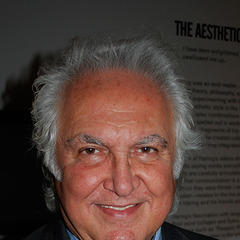
Tony Shafrazi
Tony Shafrazi

Tony Shafrazi is an individual whose profession and category are unknown. Detailed information about him is currently limited. more

You May Also Like

“I'm happy that the evolution of art in the past 25 years, and the place of art in global culture-and even finance-has gotten to be so important. One thing I'm really proud of is the fact that now anybody can do anything. The work can be small or large, painting or sculpture, whatever it might be-it's all viable, and it can come from any part of the world. So the idea of democracy has really taken hold.”

“As for the differences between audio and the printed page, the sonic aspects of poetry are important to me. I read my poems aloud to myself as I'm composing them. And I enjoy reading to an audience. I think people get tone more easily when they hear a writer read her work. Some people have told me they hear more humor in my poems at a live reading than when they see them on the page. I think that may be a matter of pacing. On the other hand, I've listened to a lot of poetry readings and I know how much you can miss. If you stop to really register one line, you miss the next three or so.”

“I am attracted to looking at the different things language can mean even in one sometimes quite ordinary utterance. Writing is partly about listening closely to yourself as you think or compose and being aware of the different tensions and weights among the words, the different directions any one of them could lead. I like to play with the multiplicity and instability of meaning partly out of a sense of adventure, to see where that takes me and partly in a whistling past the graveyard kind of way because, of course, sensing stable meaning fall away can be scary.”

“I tend to like the way poets form communities. Writing can be lonely after all. Modern life can be lonely. Poets do seem to be more social than fiction writers. This could be because of poetry's roots in the oral tradition - poetry is read aloud and even performed. I'm just speculating, of course. At any rate, because poets form these groups, they learn from one another. That is one of the best things about being a poet.”

“People probably long for something genuinely personal in a society where the personal is often indistinguishable from the "personalized." Maybe the poetry audience member is searching for his or her own "personal space" and they expect the poet to be a sort of avatar of the private life. But that sort of representation is distasteful to me. Asking a poet to represent the personal life is, paradoxically, to turn the poet into something other than a person.”

“Poets tend to form loose groups - the "Romantics" or the "Imagists". And sometimes they write manifestoes in the name of these groups. This can be good. It forces the poet and the audience to think. But it can also be dangerous. It can turn into a branding device so that potential readers believe they know all they need to know once they know you've been associated with a certain group or position. It can freeze things in place. That's where thinking stops.”

“That is the person you want publishing your book. To be in it, you really have to believe in books and love whatever it is you're publishing. Both on the book side and especially on the magazine side, I've had editors that I did not get the same feeling from. That feeling of, "This is something I believe in, I don't care how long, I'm going to publish it" - that kind of passion and commitment means a lot to you.”