Quotessence
Home / Quotes / Quote by Zora Neale Hurston

Quote by Zora Neale Hurston

“The town had a basketful of feelings good and bad about Joe's positions and possessions, but none had the temerity to challenge him. They bowed down to him rather, because he was all of these things, and then again he was all of these things because the town bowed down.”

Quote by Zora Neale Hurston

Work

Their Eyes Were Watching God

This novel follows the life of Janie Crawford, a woman who seeks independence and self-fulfillment in a society that limits her options. It delves into themes of identity, love, and the search for personal freedom. more

Author
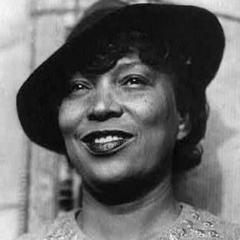
Zora Neale Hurston
Zora Neale Hurston

Zora Neale Hurston (1891-1960) was an American anthropologist, folklorist, and novelist who played a pivotal role in the Harlem Renaissance. Born in Alabama and raised in Eatonville, Florida, she became the first African American student at Barnard College, Columbia University, studying under Franz Boas. Hurston is best known for her novel "Their Eyes Were Watching God," now considered a classic of American literature. She conducted extensive anthropological fieldwork in the American South and Caribbean, preserving African American folk traditions. Though largely forgotten after her death, her work was revived by Alice Walker in the 1970s, establishing her as a foundational figure in African American literature and anthropology. more

You May Also Like

“On a strange and devious way, Siddhartha had gotten into this final and most base of all dependencies, by means of the game of dice. It was since that time, when he had stopped being a Samana in his heart, that Siddhartha began to play the game for money and precious things, which he at other times only joined with a smile and casually as a custom of the childlike people, with an increasing rage and passion. He was a feared gambler, few dared to take him on, so high and audacious were his stakes. He played the game due to a pain of his heart, losing and wasting his wretched money in the game brought him an angry joy, in no other way he could demonstrate his disdain for wealth, the merchants' false god, more clearly and more mockingly.”

“The accumulation of gold in the treasury of private individuals is the ruin of timocracy; they invent illegal modes of expenditure; for what do they or their wives care about the law? Yes, indeed. And then one, seeing another grow rich, seeks to rival him, and thus the great mass of the citizens become lovers of money. Likely enough. And so they grow richer and richer, and the more they think of making a fortune the less they think of virtue; for when riches and virtue are placed together in the scales of the balance, the one always rises as the other falls. True. And in proportion as riches and rich men are honoured in the State, virtue and the virtuous are dishonoured. Clearly. And what is honoured is cultivated, and that which has no honour is neglected.”

“They should own who can administer, not they who hoard and conceal; not they who, the greater proprietors they are, are only the greater beggars, but they whose work carves out work for more, opens a path for all. For he is the rich man in whom the people are rich, and he is the poor man in whom the people are poor; and how to give all access to the masterpieces of art and nature is the problem of civilization.”

“We doubt in others, what is in fact in ourselves. The skeletons in your own closet are the things that scare you the most about others; people who come from a background of lying are suspicious of lying in others and so on and so forth. The most trusting of people, are not people who have never been betrayed or who have never felt pain; but the most trusting of people are those who in themselves do not find those things worthy of that blame. We see the world through the eyes of the condition of our own souls.”

“...After all, the chief business of the American people is business. They are profoundly concerned with producing, buying, selling, investing and prospering in the world. I am strongly of the opinion that the great majority of people will always find these are the moving impulses of our life. But it is only those who do not understand our people, who believe that our national life is entirely absorbed by material motives. We make no concealment of the fact that we want wealth, but there are many other things that we want much more. We want peace and honor, and that charity which is so strong an element of all civilization. The chief ideal of the American people is idealism.”