Quotessence
Home / Quotes / Quote by Bruno Schulz

Quote by Bruno Schulz

“In our town there was a Gestapo officer who loved to play chess. After the occupation began, he found out that my father was the chess master of the region, and so he had him to his house every night.”

Quote by Bruno Schulz

Author
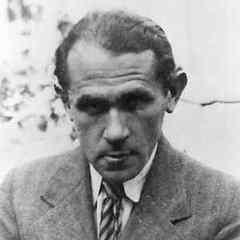
Bruno Schulz
Bruno Schulz

Bruno Schulz was a Polish writer born on July 12, 1892, and died on November 19, 1942. Known for his unique narrative style and profound philosophical insights, Schulz's work blends elements of surrealism and magical realism. more

You May Also Like

“You are well equipped with an incredible potential for absorbing knowledge. Let your imagination, the key to learning and memory, unleash that brain power and propel you along at ever-increasing speeds. It’s not an exclusive path with access granted only to those with a special gift for learning. It is, instead, available to everyone who has a brain. Anything’s possible.”

“We know next to nothing with any certainty about Pythagoras, except that he was not really called Pythagoras. The name by which he is known to us was probably a nickname bestowed by his followers. According to one source, it meant ‘He who spoke truth like an oracle’. Rather than entrust his mathematical and philosophical ideas to paper, Pythagoras is said to have expounded them before large crowds. The world’s most famous mathematician was also its first rhetorician.”

“One particular aspect of Siddhartha’s revelation of the outside world has always struck me. Quite possibly he lived his first thirty years without any knowledge of number. How must he have felt, then, to see crowds of people mingling in the streets? Before that day he would not have believed that so many people existed in all the world. And what wonder it must have been to discover flocks of birds, and piles of stones, leaves on trees and blades of grass! To suddenly realise that, his whole life long, he had been kept at arm’s length from multiplicity.”

“I had eventually come to understand that friendship was a delicate, gradual process that mustn’t be rushed or seized upon but allowed and encouraged to take its course over time. I pictured it as a butterfly, simultaneously beautiful and fragile, that once afloat belonged to the air and any attempt to grab at it would only destroy it.”