Quotessence
Home / Quotes / Quote by Michael Haneke

Quote by Michael Haneke

“I always seek to mobilize, to call on the imagination of the spectator. It's well-known that the images that are created by one's imagination are far stronger than any that I can show. In fact, it's an error, a widespread error in mainstream cinema, to always want to show things and to depict things.”

Quote by Michael Haneke

Author
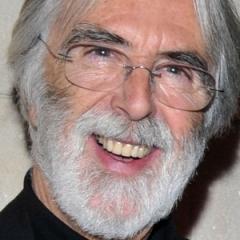
Michael Haneke
Michael Haneke

Michael Haneke is a German film director known for his profound themes and unique narrative style. His films often explore moral dilemmas, social issues, and human nature. Haneke's style is characterized by simplicity and restraint, often prompting deep reflection from audiences. more

You May Also Like

“Now the time comes that I decided I only will do art films, basically. In a way, very similar to Isabella Rossellini. I prefer to work only with people like Lars von Trier or Guy Maddin or Gus Van Sant, just to name a few. But also there's bills to pay, and sometimes you have to make a movie. So my decision from now on is art movies, or movies which are commercial, but for real money. That is my decision.”

“If you go into a forest of film stories, you never can get right through the forest straight ahead; you always have to make some U-turns or whatever, because there's some trees in the way. And that's what I'm doing. Sometimes, as an actor, if you make only these intellectual, wonderful films, which I love, from time to time you have to make a film like Armageddon so people see that you're still around.”

“If someone's lying to us, then it's rare that we know that they're lying to us. It's only in bad films that you recognize immediately that an actor's playing in such a way that you can see that he's lying, and that's simply dumb. But to reach that, it requires that you make a film in such a way that a spectator feels compelled to find his own explanation. You want to lead the spectator to find his own interpretation. To ask questions rather than provide all of the answers. Doing that leads to open endings and open dramaturgy.”

“My feeling, however, is that films that are open are more productive for the audience. The films that, if I'm in a cinema, and I'm watching a movie that answers all the questions that it raises, it's a film that bores me. In the same way, if I'm reading a book that doesn't leave me with questions, moving questions, that I feel confronted with, then for me it's a waste of time. I don't want to read a book that simply confirms what I already know.”