Quotessence
Home / Quotes / Quote by Louise Erdrich

Quote by Louise Erdrich

“Now I'm sixty-one... sixty-two, pretty soon. It's a really interesting age. Now we have women of your age, and coming up, and all these fantastic writers, who have managed to have their children but continue with their art, their work. I think women are doing the most interesting writing right now, the most interesting art. I see everything through this lens, of women finally taking their place in the world. Their true place. And it's very, very exciting to me.”

Quote by Louise Erdrich

Author
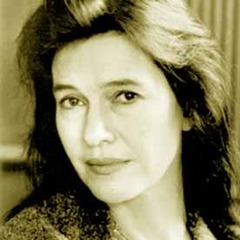
Louise Erdrich
Louise Erdrich

Louise Erdrich is an American writer known for her unique literary style and profound depiction of Native American culture. Her works blend elements of ethnicity, history, and literature, enjoying great popularity among readers. more

You May Also Like

“If you're deeply engaged in an event, you're part of it. But if you're outside of it, disinterested, you are the regard that registers history. And that disinterestedness is different from objectivity. The objective view sees only the event, while the disinterested one participates as well as views by creating that link to history. It's a type of viewing that's both inside and out of the event, that brings to the viewing the capacity for human emotion, for compassion, but holds it openly. And objectivity excludes the human element, and is therefore not a point of view open to humans.”

“Being in unfamiliar places has no effect on my writing, except that it often means I'm caught up in the logistics of travel, the places and people on the spot, etc., etc., which can mean that I don't have the time to write. But I try, wherever I am, to take a couple of hours in the early evening to go off and write. Because I never write from personal experience, per se, where I am makes no difference except for this element of available time.”

“Rather than thinking of sound and sense in my essays as two opposing principles, two perpendicular trajectories, as they are often considered in conversations around translation, or even as two disassociated phenomena that can be brought together to collaborate with more or less success, I think of sound as sense. Sound has its own meaning, and it's one of the many non-semantic dimensions of meaning in language. I want to emphasize is the formal dynamic between language-as-information and language-as-art-material.”

“For the longest time, I was just playing music and not really expecting any success - just kind of doing it because I liked doing it. While doing that, I went on a lot of shitty tours, playing to nobody, so I think it makes me appreciate it. Our band the New Pornographers have been popular for a few years now, but it still shocks me. I remember thinking we were hugely popular when we sold 15,000 records, and now this one sold 30,000 in two weeks. I'm grateful for the whole thing.”

“Sometimes I'm trying to communicate a feeling. Sometimes I can't piece it together into any kind of coherant thesis. I'm just trying to evoke some kind of mood, and put some kind of idea in somebody's head. If Marshall McLuhan or Harold Innis were looking at it, they would tell you that the genre of rock music isn't the best way to deliver a political message because it distorts it, it makes it into entertainment. Perhaps the best political message is just to speak it to somebody. I think that's something I'm always writing about in songs, just how to mediate, how to present something.”

“Sometimes, even when I'm writing the lyrics, I'm not sure what I'm getting at, but then months will pass and I'll listen to it and I'll understand it completely. I think I trust myself in that most of what comes out of me will be honest. Even if it seems like it doesn't make a lot of sense, I realize that it does. It's hard to follow, and maybe there's a lot of subtext to it that nobody knows, so it makes it impossible to follow.”