Quotessence
Home / Quotes / Quote by Jeff Orlowski

Quote by Jeff Orlowski

“The really valuable thing about documenting coral bleaching is that it is this straight, very direct visual indicator of how hot the oceans are getting. If the temperature of the water passes a certain threshold, the corals turn white. It's that simple. There's nothing natural about the cycle that's going on right now. In 2016, we lost 29 percent of the Great Barrier Reef. So 29 percent of the Great Barrier Reef died in a single year, because the water was hot.”

Quote by Jeff Orlowski

Author
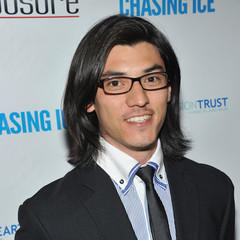
Jeff Orlowski
Jeff Orlowski

Jeff Orlowski is a renowned documentary filmmaker, born on February 18, 1984. His work is known for its in-depth exploration of environmental, social, and technological issues, with his documentaries 'Chasing Coral' and 'Chasing Ice' particularly notable. more

You May Also Like

“There's a huge challenge around coral bleaching specifically, because when most people think about coral, they think about the beautiful, white sculpture sitting on their mantle. And it looks so pristine and clean and beautiful. It's not supposed to look like that when it's in the ocean. It has color, it has animal flesh living on it, it has plants living inside of that. They look very, very different when they're healthy in the ocean than they do when they're sitting in somebody's home.”

“Working in the Arctic is definitely colder, but not necessarily harder. There were different challenges. And in many ways, Chasing Coral was even more of a struggle for me personally. And more of a struggle to capture. Glaciers right now are changing very consistently. The interesting thing that we realized with Chasing Coral was that the corals reefs. They can go from living to dead in two months. And if you're not there at the right time to capture that before and after, you just show up and it's a dead reef. So it was a challenge to be at the right place at the right time.”

“I've spent years studying words. Linguistics, language, the power of words, the power of phrases on human beings. All of that. It's part of my, almost obsessive, fascination. It turns out that there are some keys that we all need to know about how conversations impact us, because they do at a chemical level. There are certain things that if we learned this, it would totally change our interactions with others, and that's the following. There are certain words that have a feeling of, "I love you, I care for you, you're in my tribe."”

“Every human being needs to know to be a great parent, for a teacher to be a great teacher, and for a business partner to be a great business partner. We can't fall back on, "Oh, I only said it once and it didn't matter." That kind of phrase. That's a not-good thing for a leader to hold inside. If what that leader did is do that separation and this person now knew that they were not going to be on the popular team, doing it once and then not doing it again isn't enough to erase what just happened.”

“Something that we call developing the third eye in others. The eye is that people have intention when they're interacting, and often don't realize that there is an impact for everything that they do. The littlest thing, from scratching their head back here. This is, universally, "I don't understand what you said." That's what the scratch behind the ear means. If we know that, it's a whole other level. I could go back and say, "Let me do this again, because I'm seeing that it's not fully registering." We should be teaching these to people, is what I'm saying.”

“I want to share that I had and still do, and a great relationship with Angela Ahrendts. She was the CEO of Burberry. One of the things that I saw her do at Burberry was that every person she screened for a job, they had to go through the trust test. Do they understand what trust even means. Do they consider it in their life. If people didn't pass that part of the test, they didn't get into Burberry, because she wanted a team. It was extraordinary to be with her, because she brought them to the height of their best behaviors, including trust, which is the most important thing here.”

“What we're trying to do in conversational intelligence is not only define that trust continuum for people, not only helping them notice, which is so important, what's happening in them and others when distrust lives, but also how to bring people in trust. When they do, what happens, this part of our brain, the prefrontal cortex is loaded with wisdom, integrity, strategy, insights, empathy, foresight. It's beautiful. It's so designed for that, and often it's turned off because people don't have trust with each other.”

“It's 100% important to have a dialog with yourself going all the time. That's an ego talking to you, beckoning you to do more, but it's not the voice that you need to have in order to solidify the trust relationship. You have to be really transparent with yourself and say, "What can I do now?" What can I really do and how do I bring that into the world. In other words, those self-talk, we have to constantly be auditing, is our voice inside our best friend? If it's not, you have to make it your best friend.”