“After an unequivocal experience of the inefficacy of the subsisting federal government, you are called upon to deliberate on a new Constitution for the United States of America.”
Quote by Alexander Hamilton
Work
The federalist papers
Comprising a series of 85 essays, The Federalist Papers were written by Alexander Hamilton, James Madison, and John Jay. These essays were published in newspapers in New York from 1787 to 1788, aiming to persuade the public to support the ratification of the Constitution. The works are considered foundational texts in American political theory and constitutional law. more
Author
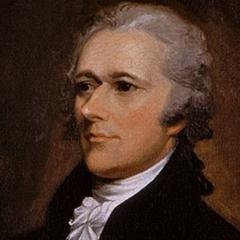
Alexander Hamilton
Alexander Hamilton was a Founding Father of the United States, born on January 11, 1757, and died on July 12, 1804. He played a crucial role in the American Revolutionary War and was instrumental in the drafting of the U.S. Constitution. As the first Secretary of the Treasury, Hamilton promoted fiscal stability and economic growth, establishing the First Bank of the United States and proposing solutions for federal debt. His ideas and policies had a profound impact on the early political and economic development of the United States. more
You May Also Like
Source: The Virginia Report of 1799-1800: Touching the Alien and Sedition Laws; Together with the Virginia Resolutions of December 21, 1798, Including the Debate and Proceedings Thereon in the House of Delegates of Virginia and Other Documents Illustrative of the Report and Resolutions
Source: Commentaries on the Constitution of the United States: With a Preliminary Review of the Constitutional History of the Colonies and States, Before the Adoption of the Constitution
Source: Commentaries on the Constitution of the Un. States: With a Prelim. Review of the Constitut. History of the Colonies and States, Bef. the Adoption of the Constitution
Source: 1829-1836
Source: The Virginia Report of 1799-1800: Touching the Alien and Sedition Laws; Together with the Virginia Resolutions of December 21, 1798, Including the Debate and Proceedings Thereon in the House of Delegates of Virginia and Other Documents Illustrative of the Report and Resolutions
Source: The Debates in the Several State Conventions on the Adoption of the Federal Constitution: As Recommended by the General Convention at Philadelphia in 1787. Together with the Journal of the Federal Convention, Luther Martin's Letter, Yates's Minutes, Congressional Opinions, Virginia and Kentucky Resolutions of '98-'99, and Other Illustrations of the Constitution
Source: The federalist papers