“When an individual passes from one period of life to another a time comes when he cannot go on in senseless activity and excitement as before, but has to understand that although he has out-grown what before used to direct him, this does not mean that he must live without any reasonable guidance, but rather that he must formulate for himself an understanding of life corresponding to his age, and having elucidated it must be guided by it. And in the same way a similar time must come in the growth and development of humanity.”
Quote by Leo Tolstoy
Work
The Spiritual Works of Leo Tolstoy: A Confession, The Kingdom of God is Within You, What I Believe, Christianity and Patriotism, Reason and Religion, The Gospel in Brief and more: Lessons on What it Means to be a True Christian From the Greatest Russian Novelists and Author of War and Peace & Anna Karenina (Including Letter to a Kind YouthandCorrespondences with Gandhi)
The Spiritual Works of Leo Tolstoy is a compilation of the Russian author's reflections on spirituality and Christianity. It encompasses a variety of writings, including 'A Confession,' 'The Kingdom of God is Within You,' and 'What I Believe,' among others. These texts offer insights into Tolstoy's personal beliefs and his interpretation of Christian principles. The collection also includes 'Reason and Religion' and 'The Gospel in Brief,' which further elaborate on his theological views. Additionally, the book features 'Letter to a Kind Youth' and correspondence with Mahatma Gandhi, providing a glimpse into Tolstoy's philosophical and ethical considerations. more
Author
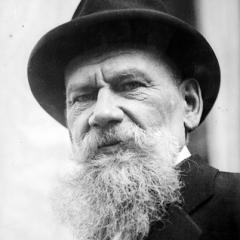
Leo Tolstoy
Leo Tolstoy was a Russian writer and thinker, a prominent representative of 19th-century Russian literature. His works deeply revealed social contradictions and human nature, and had a profound impact on the world. more
You May Also Like
“Wealth is a great sin in the eyes of God. Poverty is a great sin in the eyes of man.”
“The compassionate are not rich; therefore, the rich are not compassionate.”
Source: The Kingdom of God Is Within You: Easyread Large Bold Edition
“You don't build your character by doing what everybody else is doing.”
Source: Leo Tolstoy: Letters and Papers