“I have often thought that if heaven had given me choice of my position and calling, it should have been on a rich spot of earth, well watered, and near a good market for the productions of the garden. No occupation is so delightful to me as the culture of the earth, and no culture comparable to that of the garden. Such a variety of subjects, some one always coming to perfection, the failure of one thing repaired by the success of another, and instead of one harvest a continued one through the year.”
Quote by Thomas Jefferson
Work
The Writings of Thomas Jefferson: Correspondence, contin
The Writings of Thomas Jefferson: Correspondence, continuation is a compilation of Jefferson's extensive correspondence, offering insight into his role in the American Revolution, his presidency, and his contributions to the drafting of the Declaration of Independence and the Constitution. more
Author
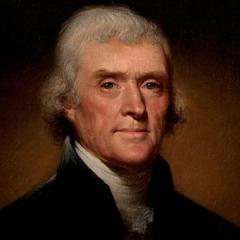
Thomas Jefferson
Thomas Jefferson was the third President of the United States, a distinguished politician, philosopher, architect, and scientist. He was born on April 13, 1743, and died on July 4, 1826. Jefferson advocated for democracy and freedom in politics and was one of the main authors of the Declaration of Independence. His political ideas had a profound impact on the founding and development of the United States. more
You May Also Like
Source: The writings of Thomas Jefferson: being his autobiography, correspondence, reports, messages, addresses, and other writings, official and private
Source: The Works of Thomas Jefferson: Correspondence and Papers, 1816-1826
Source: The Writings of Thomas Jefferson: Correspondence, cont
Source: The Papers of Thomas Jefferson: 1 October 1814 to 31 August 1815
“Say nothing of my religion. It is known to God and myself alone.”
Source: Memoir, Correspondence, and Miscellanies: From the Papers of Thomas Jefferson
“We are protecting civilians. We are unarmed. We are no threat to you. Please do not shoot.”
“It is every Americans' right and obligation to read and interpret the Constitution for himself.”