Quotessence
Home / Quotes / Quote by Hermann Hesse

Quote by Hermann Hesse

Work

Demian

Demian is a coming-of-age story that delves into the complexities of adolescence and the search for personal identity. The narrative follows the protagonist's journey as he navigates the challenges of growing up and encountering various philosophical and existential ideas. more

Author

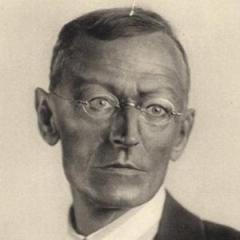
Hermann Hesse
Hermann Hesse

Hermann Hesse was a German poet and novelist, born on July 2, 1877, and died on August 9, 1962. Known for his profound psychological descriptions and exploration of human nature, his works include classics such as 'Steppenwolf' and 'The Glass Bead Game'. more

You May Also Like

“In comedy, if fate is to appear comic, it must be arbitrary and appear to behave like a person, and the people who are subject to fate should not be responsible for what occurs. In tragedy fate is not an arbitrary person - it is we who are responsible, and we bring our fate upon ourselves. Where fate plays too large a role, however, the effect is not tragic but pathetic. The effect of Greek tragedy can seem pathetic to us just in this way. The Greeks naively argue that the sign of guilt is misfortune and that therefore if there is misfortune, then there must be guilt. Comic fate is arbitrary and does not involve real suffering - whatever suffering in is presented in comic must be temporary and imaginary.”

“As for the Economy, this new embodiment as I called it of Fate or the Gods, this global power that governs the lives of Chinese workers in village factories, Brazilian miners, children working cocoa plantations in West Africa, sex workers in Mumbai, real estate salesmen in Connecticut, sheep-farmers in Scotland or on the Darling Downs, disembodied voices in call centres in Bangalore, workers in the hospitality industry in Cancun or Venice or Fiji, keeping them fatefully interconnected, in its mysterious way, by laws that do exist, the experts assure us, though they cannot agree on what they are- it is too impersonal, too implacable for us to live comfortably with, or even to catch hold of and defy. When we were in the hands of the Gods, we had stories that made these distant beings human and brought them close. They got angry, they took our part or turned violently against us. They fell in love with us and behaved badly. They had their own problems and fought with one another, and like us were sometimes foolish. But their interest in us was personal. They watched over us and were concerned though in moments of willfulness or boredom they might also torment us as “wanton boys” do flies. We had our ways of obtaining their help as intermediaries. We could deal with them. The Economy is impersonal. It lacks manageable dimensions. We have discovered no mythology to account for its moods. Our only source of information about it, the Media and their swarm of commentators, bring us “reports,” but these do not help: a possible breakdown in the system, a new crisis, the descent of Greece, or Ireland or Portugal, like Jove’s eagle, of the IMF. We are kept in a state of permanent low-level anxiety broken only by outbreaks of alarm.”