Quotessence
Home / Quotes / Quote by Hermann Hesse

Quote by Hermann Hesse

“Most men, the herd, have never tasted solitude. They leave father and mother, but only to crawl to a wife and quietly succumb to new warmth and ties. They are never alone, they never commune with themselves. And when a solitary man crosses their path, they fear him and hate him like the plague, they fling stones at him and find no peace until they are far from him.”

Quote by Hermann Hesse

Author
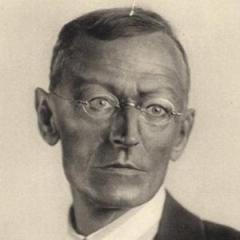
Hermann Hesse
Hermann Hesse

Hermann Hesse was a German poet and novelist, born on July 2, 1877, and died on August 9, 1962. Known for his profound psychological descriptions and exploration of human nature, his works include classics such as 'Steppenwolf' and 'The Glass Bead Game'. more

You May Also Like

“Ruefully, nobody perceives me as exceptionally gifted, intelligent, handsome, or physically strong. My sense of alienation stems from an inferiority complex, depressive nature, and manic tendencies that repulse other people. For many years, I passively accepted my clumsiness, uselessness, and lack of capacity for learning by avoiding serious literature and other opportunities for personal growth. I embraced personal ignorance by favoring tactile sensations and gross pleasure afforded in a materialistic culture that revels in a hedonistic lifestyle.”

“A sundry of intimate encounters with the vibrant intellect of perceptive thinkers dissolves a recluse’s shroud of seclusion. Can I manufacture the needed first aid kit to arrest my internal hemorrhaging? Can I stave off my mental deterioration by exploring the written words of renowned authors? Can I map a course out of my present quandary by scouring the libraries brimming with the beautiful mind works of previous generations of eminent writers? Will diligent encounters with the incisive thoughts of outstanding essayist shred the indivisible bars shielding my indeterminate self and release me from of the monochrome cage of self-imposed isolation? Can respected writers’ perceptive soul-searching create a template for my inchoative thoughts spontaneously to mature?”

“He cleared his throat. "Can I ask you, what does a woman mean when she says she needs space?" He put his hand to his chest. "I have lost my wife, she has left, and it hurts so deeply." I stifled a laugh, not because I thought he pain (or inebriation, if that's what it was) was funny, but because it was too ridiculous. After all this, to be happily sitting alone on a beach on my fortieth birthday and be called upon by a male stranger to answer for his aloneness.”