Quotessence
Home / Quotes / Quote by Russell Page

Quote by Russell Page

“If you wish to make anything grow, you must understand it, and understand it in a very real sense. 'Green fingers' are a fact, and a mystery only to the unpracticed. But green fingers are the extensions of a verdant heart.”

Quote by Russell Page

Work

The Education of a Gardener

This book delves into the fundamentals of gardening, covering topics such as plant selection, soil preparation, watering techniques, and pest control. It provides practical advice and detailed instructions for creating and maintaining a thriving garden. The author shares personal experiences and anecdotes, offering a blend of practical wisdom and philosophical musings on the joys and challenges of gardening. more

Author
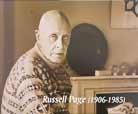
Russell Page
Russell Page

Russell Page, a renowned British garden designer, was born in London in 1906 and passed away in 1985. He is known for his unique style of garden design and profound understanding of the natural environment. Page's garden design works are spread across the globe, including the UK, the United States, and France, and his design philosophy has had a profound impact on modern garden art. more

You May Also Like

“sweet spring is your time is my time is our time for springtime is lovetime and viva sweet love (all the merry little birds are flying in the floating in the very spirits singing in are winging in the blossoming) lovers go and lovers come awandering awondering but any two are perfectly alone there's nobody else alive (such a sky and such a sun i never knew and neither did you and everybody never breathed quite so many kinds of yes) not a tree can count his leaves each herself by opening but shining who by thousands mean only one amazing thing (secretly adoring shyly tiny winging darting floating merry in the blossoming always joyful selves are singing) sweet spring is your time is my time is our time for springtime is lovetime and viva sweet love”

“It's very simple. As you grow, you learn more. If you stayed twenty-two, you'd always be as ignorant as you were at twenty-two. Aging is not just decay, you know. It's growth. It's more than the negative that you're going to die, it's also the positive that you understand you're going to die, and that you live a better life because of it.”

“Whether we are speaking of a flower or an oak tree, of an earthworm or a beautiful bird, of an ape or a person, we will do well, I believe, to recognize that life is an active process, not a passive one. Whether the stimulus arises from within or without, whether the environment is favorable or unfavorable, the behaviors of an organism can be counted on to be in the direction of maintaining, enhancing, and reproducing itself. This is the very nature of the process we call life. This tendency is operative at all times. Indeed, only the presence or absence of this total directional process enables us to tell whether a given organism is alive or dead. The actualizing tendency can, of course, be thwarted or warped, but it cannot be destroyed without destroying the organism. I remember that in my boyhood, the bin in which we stored our winter's supply of potatoes was in the basement, several feet below a small window. The conditions were unfavorable, but the potatoes would begin to sprout—pale white sprouts, so unlike the healthy green shoots they sent up when planted in the soil in the spring. But these sad, spindly sprouts would grow 2 or 3 feet in length as they reached toward the distant light of the window. The sprouts were, in their bizarre, futile growth, a sort of desperate expression of the directional tendency I have been describing. They would never become plants, never mature, never fulfill their real potential. But under the most adverse circumstances, they were striving to become. Life would not give up, even if it could not flourish. In dealing with clients whose lives have been terribly warped, in working with men and women on the back wards of state hospitals, I often think of those potato sprouts. So unfavorable have been the conditions in which these people have developed that their lives often seem abnormal, twisted, scarcely human. Yet, the directional tendency in them can be trusted. The clue to understanding their behavior is that they are striving, in the only ways that they perceive as available to them, to move toward growth, toward becoming. To healthy persons, the results may seem bizarre and futile, but they are life's desperate attempt to become itself. This potent constructive tendency is an underlying basis of the person-centered approach.”

“13 NOTES She hesitated. For two years she had kept as far away from Mikael Blomkvist as she could. And yet he kept sticking to her life like gum on the sole of her shoe, either on the Net or in real life. On the Net it was O.K. There he was no more than electrons and words. In real life, standing on her doorstep, he was still fucking attractive. And he knew her secrets just as she knew all of his. She looked at him for a moment and realized that she now had no feelings for him. At least not those kinds of feelings. He had in fact been a good friend to her over the past year. She trusted him. Maybe. It was troubling that one of the few people she trusted was a man she spent so much time avoiding. Then she made up her mind. It was absurd to pretend that he did not exist. It no longer hurt her to see him. She opened the door wide and let him into her life again.”

“Belief is not subject to the will. Men think as they must. Children do not, and cannot, believe exactly as they were taught. They are not exactly like their parents. They differ in temperament, in experience, in capacity, in surroundings. And so there is a continual, though almost imperceptible change. There is development, conscious and unconscious growth, and by comparing long periods of time we find that the old has been almost abandoned, almost lost in the new.”