Quotessence
Home / Quotes / Quote by John Ruskin

Quote by John Ruskin

Work

The works of John Ruskin

This extensive compilation includes a variety of works that explore art, architecture, social issues, and the role of the artist in society. Ruskin's influential essays on the aesthetics of nature and the importance of craftsmanship are particularly noteworthy. more

Author
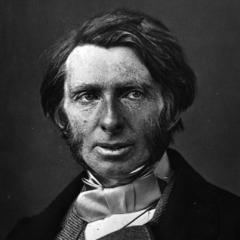
John Ruskin
John Ruskin

John Ruskin was an influential British art critic, writer, and social critic. Known for his profound insights into art, architecture, and social issues, he had a significant impact on the aesthetics and culture of the Victorian era. more

You May Also Like

“By this time, like one who had set out on his way by night, and travelled through a region of smooth or idle dreams, our history now arrives on the confines, where daylight and truth meet us with a clear dawn, representing to our view, though at a far distance, true colours and shapes.”

“Prophecy and history predict and record a great and universal apostasy which was to be followed by a restoration as predicted by John in Revelation. The fact of the great apostasy is attested by both sacred and secular writ, and history bears witness that it became universal. We proclaim this fact of history not as an attack on any church. We do not assume any position of "holier than thou" or "wiser than thou," but we announce this historic fact of the apostasy as a vindication of the claim that there has been in fact a restoration of the gospel.”

“It is common to assume that human progress affects everyone - that even the dullest man, in these bright days, knows more than any man of, say, the Eighteenth Century, and is far more civilized. This assumption is quite erroneous. . . . The great masses of men, even in this inspired republic, are precisely where the mob was at the dawn of history. They are ignorant, they are dishonest, they are cowardly, they are ignoble. They know little if anything that is worth knowing, and there is not the slightest sign of a natural desire among them to increase their knowledge.”

“The future of nations cannot be frozen . . . cannot be foreseen. If we are going to accomplish anything in our time we must approach our problem in the knowledge that there is nothing rigid or immutable in human affairs. History is a story of growth, decay and change. If no provision, no allowance is made for change by peaceful means, it will come anyway - and with violence.”

“It [the scientific revolution] outshines everything since the rise of Christianity and reduces the Renaissance and Reformation to the rank of mere episodes, mere internal displacements, within the system of medieval Christendom. . . . It looms so large as the real origin of the modern world and of the modern mentality that our customary periodization of European history has become an anachronism and an encumbrance.”