Quotessence
Home / Quotes / Quote by Pierre Teilhard de Chardin

Quote by Pierre Teilhard de Chardin

Author
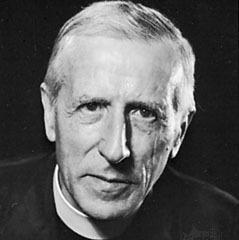
Pierre Teilhard de Chardin

Pierre Teilhard de Chardin was a French philosopher, theologian, and paleontologist. His thoughts were deeply influenced by evolution and religious faith, proposing concepts of 'cosmic consciousness' and 'human unity'. Chardin's works covered various fields such as philosophy, theology, and science, and had a profound impact on 20th-century philosophical and religious thought. more

You May Also Like

“But at the same time, in reality, what a difference there is between the world today, and what it used to be! And with the passage of more time, some two or three hundred years, say, people will look back at our own times with horror, or with sneering laughter, because all of our present day life will appear so clumsy, and burdensome, extraordinarily inept and strange. Yes, certainly, what a life it will be then, what a life!”

“No theory changes what it is a theory about. Nothing is changed because we look at it, talk about it, or analyze it in a new way. Keats drank confusion to Newton for analyzing the rainbow, but the rainbow remained as beautiful as ever and became for many even more beautiful. Man has not changed because we look at him, talk about him, and analyze him scientifically. ... What does change is our chance of doing something about the subject of a theory. Newton's analysis of the light in a rainbow was a step in the direction of the laser.”

“The development of artificial intelligence may well imply that man will relinquish his intellectual supremacy in favor of thinking machines. With oceans of time available for future innovation, there seems to be no reason why machines cannot achieve and surpass anything of which the human brain is capable.”

“What disconcerts the modern world at its very roots is not being sure, and not seeing how it ever could be sure, that there is an outcome-a suitable outcome to evolution. Half our present uneasiness would be turned to happiness if we could once make up our minds to accept the facts and place the essence and the measure of our modern cosmogonies within a noogenesis.”