Quotessence
Home / Quotes / Quote by Soren Kierkegaard

Quote by Soren Kierkegaard

“What is a poet? An unhappy person who conceals profound anguish in his heart but whose lips are so formed that as sighs and cries pass over them they sound like beautiful music.”

Quote by Soren Kierkegaard

Author
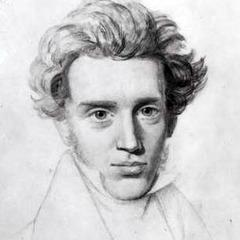
Soren Kierkegaard
Soren Kierkegaard

Søren Kierkegaard was a 19th-century Danish philosopher known for his existentialist philosophy and profound explorations of religious, ethical, and aesthetic issues. His ideas have had a profound impact on subsequent philosophers and literature. more

You May Also Like

“I prefer people to disagree with me because I really don't think I'm smart enough to know what all the answers are and I think the back and forth ... we have a lot of it in our office, strong personalities, big intellects, good ideas - I think that back and forth has produced better strategies and tactics for us than if I sat in my office and decided we're doing those 10 things and that's the end of it.”

“Baseball is actually interesting, I don't find me to be that interesting. But I am realistic enough to understand it's not about me, it's about the fact that I'm speaking for the game and people care so deeply about the game that they're watching to make sure that you do the right thing. And I feel a real responsibility to try to do the right thing as a result.”

“All of depiction is fiction, it's only a question of degree. When we think of images, such as the signing of the declaration of independence, we think of that wonderful John Trumbull painting Declaration of Independence that is at the Yale Art Gallery and on the back of our money. When we think of that historical moment we think of that image. That image never happened like that. All of those people were never in that room together to sign that paper. It's a beautiful fiction to help us have an understanding of what went on.”

“That's the nature of representation; every time we represent something we alter it and slightly change it. And so with that as my foundation, understanding that it's always fictional to some degree, I give myself a certain freedom to really explore and ask myself questions. What might not have been understood at that time? What might have been hidden at that time? What narrative in this particular image wasn't the primary image, but is really important? That is really interesting to me, and then I try to tease that out as much as I can.”

“History is a continuum, it's not these separate moments. That's how we look at it. In the 1700s in Virginia before there were police officers - there were these groups of men who would wander the countryside - and if they saw a black man or a black woman they would presume that that black man or woman was a slave. If you didn't have the kind of pass that you were supposed to have, then you could be whipped, you could be enslaved, you could be taken into custody - even if you were free. And as I'm reading this I find myself thinking, "How is this any different from stop-and-frisk?"”