Quotessence
Home / Quotes / Quote by Edith Hamilton

Quote by Edith Hamilton

“Civilization...is a matter of imponderables, of delight in the thins of the mind, of love of beauty, of honor, grace, courtesy, delicate feeling. Where imponderables, are things of first importance, there is the height of civilization, and, if at the same time, the power of art exists unimpaired, human life has reached a level seldom attained and very seldom surpassed.”

Quote by Edith Hamilton

Author
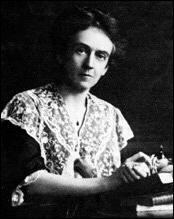
Edith Hamilton
Edith Hamilton

Edith Hamilton, an American renowned classical literature author, was born on August 12, 1867, and passed away on May 31, 1963. Her works, which introduce classical literature in an accessible manner, have been well-received by readers. more

You May Also Like

“Separated lovers cheat absence by a thousand fancies which have their own reality. They are prevented from seeing one another and they cannot write; nevertheless they find countless mysterious ways of corresponding, by sending each other the song of birds, the scent of flowers, the laughter of children.”

“For no one, in our long decline,So dusty, spiteful and divided,Had quite such pleasant friends as mine,Or loved them half as much as I did. [stanza 3]The library was most inviting:The books upon the crowded shelvesWere mainly of our private writing:We kept a school and taught ourselves. [stanza 15]From quiet homes and first beginning,Out to the undiscovered ends,Theres nothing worth the wear of winning,But laughter and the love of friends. [stanza 22]You do retain the song we set,And how it rises, trips and scans?You keep the sacred memory yet,Republicans? Republicans?[stanza 36]”

“All human beings have failings, all human beings have needs and temptations and stresses. Men and women who live together through long years get to know one another's failings; but they also come to know what is worthy of respect and admiration in those they live with and in themselves. If at the end one can say, This man used to the limit the powers that God granted him; he was worthy of love and respect and of the sacrifices of many people, made in order that he might achieve what he deemed to be his task, then that life has been lived well and there are no regrets.”

“My passions are all asleep from my having slumbered till nearly eleven and weakened the animal fiber all over me to a delightful sensation about three degrees on this sight of faintness - if I had teeth of pearl and the breath of lilies I should call it languor - but as I am I must call it laziness. In this state of effeminacy the fibers of the brain are relaxed in common with the rest of the body, and to such a happy degree that pleasure has no show of enticement and pain no unbearable frown. Neither poetry, nor ambition, nor love have any alertness of countenance as they pass by me.”

“Feminist art is not some tiny creek running off the great river of real art. It is not some crack in an otherwise flawless stone. It is, quite spectacularly I think, art which is not based on the subjugation of one half of the species. It is art which will take the great human themes -love, death, heroism, suffering, history itself -and render them fully human. It may also, though perhaps our imaginations are so mutilated now that we are incapable even of the ambition, introduce a new theme, one as great and as rich as those others -should we call it joy?”

“Trade is the natural enemy of all violent passions. Trade loves moderation, delights in compromise, and is most careful to avoid anger. It is patient, supple, and insinuating, only resorting to extreme measures in cases of absolute necessity. Trade makes men independent of one another and gives them a high idea of their personal importance: it leads them to want to manage their own affairs and teaches them to succeed therein. Hence it makes them inclined to liberty but disinclined to revolution.”

“Wildness and silence disappeared from the countryside, sweetness fell from the air, not because anyone wished them to vanish or fall but because throughways had to floor the meadows with cement to carry the automobiles which advancing technology produced. Tropical beaches turned into high-priced slums where thousand-room hotels elbowed each other for glimpses of once-famous surf not because those who loved the beaches wanted them there but because enormous jets could bring a million tourists every year - and therefore did.”