Quotessence
Home / Quotes / Quote by Claudia Rankine

Quote by Claudia Rankine

“I don't know about forgiving, but it's an "I'm still here." And it's not just because I have nowhere else to go. It's because I believe in the possibility. I believe in the possibility of another way of being. Let's make other kinds of mistakes; let's be flawed differently.”

Quote by Claudia Rankine

Author
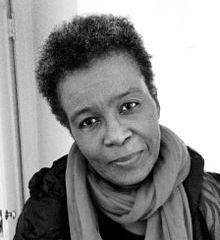
Claudia Rankine
Claudia Rankine

Claudia Rankine is an American poet known for her poetry and prose works that explore themes of race, gender, and identity. Her works often start from personal experiences and public events, known for their unique narrative style and linguistic experimentation. more

You May Also Like

“"Unputdownable" is, I suppose, something we all dream of, maybe without knowing it. I realized, some time ago, that a novel can hold a lot, and it made sense that this one was not of the sleek and economical variety, but instead the "full" type. Novel as piñata. And the reader does the whacking. I had a central idea, which is to look at what happens to talent over time.”

“Creativity is just connecting things. When you ask creative people how they did something, they feel a little guilty because they didn't really do it, they just saw something. It seemed obvious to them after a while. That's because they were able to connect experiences they've had and synthesize new things.”

“Objectifying your own novel while writing it never really helps. Instead, I guess while you're writing you need to think: This is the novel I want to write. And when you're done you need to think: This is what the novel I wanted to write feels like and reads like and looks like. Other people might call it sweeping or small, but it's the book you chose.”

“Though I consider The Chronology of Water to be an anti-memoir for very precise reasons, it is an art form, and thus as open to "critique" as any other art form. Memoir has a form, formal strategies, issues of composition and craft, style, structure, all the elements of fiction or nonfiction or painting or music or what have you.”

“On a spectrum of literary productions, memoir is just another form. If the person doing the reviewing or critiquing was ill-educated about literary forms, they could write something dunderheaded about the author or their life (I've seen these and barfed at them), but anyone who is well-practiced and educated in literature - why would they leave that at the door when entering memoir?”