“We are made of starstuff.”
Quote by Carl Sagan
Work
Conversations with Carl Sagan
Conversations with Carl Sagan is a compilation of interviews and dialogues with the celebrated scientist, Carl Sagan. The book delves into a variety of topics, including Sagan's research in astronomy, his exploration of the cosmos, and his perspectives on science, philosophy, and the future of humanity. It provides a glimpse into Sagan's intellectual journey and his passion for sharing knowledge with the public. more
Author
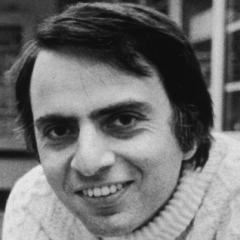
Carl Sagan
Carl Sagan was an American astronomer, cosmologist, author, and science communicator, born on November 9, 1934, in Brooklyn, New York. He is renowned for his profound research into the cosmos and his dedication to popularizing science. Sagan proposed numerous theories about the origin of the universe and life, and he made complex scientific knowledge accessible to the public with his unique perspective and clear, engaging writing style. more
You May Also Like
Source: Delphi Complete Works of Edgar Allan Poe (Illustrated)
“All statements are true, if you are free to redefine their terms.”
Source: The Vision of the Anointed: Self-congratulation as a Basis for Social Policy
“Any statistics can be extrapolated to the point where they show disaster.”
Source: The Vision of the Anointed: Self-congratulation as a Basis for Social Policy
Source: Plymouth Rock and the Pilgrims and other salutary platform opinions
“Killing one man is murder. Killing millions is a statistic”
Source: Rights for Americans: the speeches of Robert F. Kennedy
“Most variables can show either an upward or downward trend, depending on the base year chosen.”
Source: The Vision of the Anointed: Self-congratulation as a Basis for Social Policy
Source: The works of James Abram Garfield. Volume 1
Source: The Vision of the Anointed: Self-congratulation as a Basis for Social Policy