Quotessence
Home / Quotes / Quote by Victor Hugo

Quote by Victor Hugo

“Let us reflect, if we wish to be brilliant. Too much improvisation empties the mind in a stupid way. Running beer gathers no froth. No haste, gentlemen.”

Quote by Victor Hugo

Author
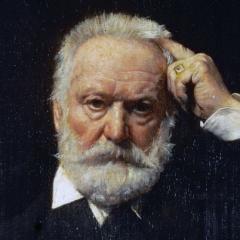
Victor Hugo
Victor Hugo

Victor Hugo, a French romantic poet, novelist, and playwright, was born on February 26, 1802, and died on May 22, 1885. He is considered one of the greatest writers in French literary history, known for his profound humanistic concerns and rich imagination. more

You May Also Like

“[Cult] members learn a new vocabulary that is designed to constrict their thinking into absolute, black-and-white, thought-stopping clichés that conform to group ideology. (“Lock her up” and “Build the Wall” are Trumpian examples. Even his put-downs and nicknames—Crooked Hillary, Pocahontas for Elizabeth Warren—function to block other thoughts. Terms like “deep state” and “globalist” also act as triggers. They rouse emotion and direct attention.)”

“If you’re not happy, then something is wrong. A person comes into the world as a happy being, yet over time, the happiness fades away and they find themselves in this bubble of anxiety and misery all the time. And it’s a comfortable place to stay, so they end up hanging out in this bubble for years and years before it suddenly dawns on them that life is meant to be happy. And, it is. It’s just that they’re too busy getting caught up in worry and stress to notice that life is magnificent and beautiful. Being alive is good. Being alive should already make you happy.”

“Like prepositional phrases, certain structural arrangements in English are much more important than the small bones of grammar in its most technical sense. It really wouldn't matter much if we started dropping the s from our plurals. Lots of words get along without it anyway, and in most cases context would be enough to indicate number. Even the distinction between singular and plural verb forms is just as much a polite convention as an essential element of meaning. But the structures, things like passives and prepositional phrases, constitute, among other things, an implicit system of moral philosophy, a view of the world and its presumed meanings, and their misuse therefore often betrays an attitude or value that the user might like to disavow.”