Quotessence
Home / Quotes / Quote by Tony Kushner

Quote by Tony Kushner

“She preferred silence. So I do not know her and yet I know her. She was . . . (He touches the coffin) . . . not a person but a whole kind of person, the ones who crossed the ocean, who brought with us to America the villages of Russia and Lithuania—and how we struggled, and how we fought, for the family, for the Jewish home, so that you would not grow up here, in this strange place, in the melting pot where nothing melted.”

Quote by Tony Kushner

Work

Millennium Approaches

Browse quotes and source details for this work. more

Author
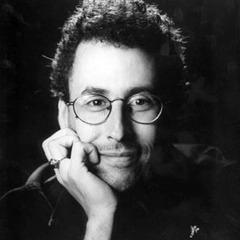
Tony Kushner
Tony Kushner

Tony Kushner is an American playwright known for his profound social and political commentary and complex character development. His works often explore historical, moral, and identity issues, reflecting the diversity and complexity of American society. His most famous works include 'Angels in America' and 'Homebody/Kabul.' Kushner has received numerous awards for his outstanding contributions to theater, including the Pulitzer Prize. more

You May Also Like

“there is found a third level of religious experience, even if it is seldom found in a pure form. I will call it the cosmic religious sense. This is hard to make clear to those who do not experience it, since it does not involve an anthropomorphic idea of God; the individual feels the vanity of human desires and aims, and the nobility and marvelous order which are revealed in nature and in the world of thought. He feels the individual destiny as an imprisonment and seeks to experience the totality of existence as a unity full of significance. Indications of this cosmic religious sense can be found even on earlier levels of development—for example, in the Psalms of David and in the Prophets. The cosmic element is much stronger in Buddhism, as, in particular, Schopenhauer's magnificent essays have shown us. The religious geniuses of all times have been distinguished by this cosmic religious sense, which recognizes neither dogmas nor God made in man's image. Consequently there cannot be a church whose chief doctrines are based on the cosmic religious experience. It comes about, therefore, that we find precisely among the heretics of all ages men who were inspired by this highest religious experience; often they appeared to their contemporaries as atheists, but sometimes also as saints.”

“What the engineers had first seen in the October coup d'état was ruin. (And for three years there had been ruin and nothing else.) Beyond that, they had seen the loss of even the most elementary freedoms. (And these freedoms never returned.) How, then, could engineers not have wanted a democratic republic? How could engineers accept the dictatorship of the workers, the dictatorship of their subordinates in industry, so little skilled or trained and comprehending neither the physical nor the economic laws of production, but now occupying the top positions, from which they supervised the engineers? Why shouldn't the engineers have considered it more natural for the structure of society to be headed by those who could intelligently direct its activity?”