Quotessence
Home / Quotes / Quote by Thomas Hardy

Quote by Thomas Hardy

“At once a voice arose among The bleak twigs overhead In a full-hearted evensong Of joy illimited; An aged thrush, frail, gaunt, and small, In blast-beruffled plume, Had chosen thus to fling his soul Upon the growing gloom. So little cause for carollings Of such ecstatic sound Was written on terrestrial things Afar or nigh around, That I could think there trembled through His happy good-night air Some blessed Hope, whereof he knew And I was unaware.”

Quote by Thomas Hardy

Work

The Complete Poems

This volume encompasses a wide array of poems, showcasing the poet's entire body of work, including various styles and themes. more

Author

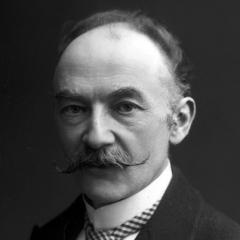
Thomas Hardy
Thomas Hardy

Thomas Hardy, a British novelist born on June 2, 1840, and died on January 11, 1928, is renowned for his novels that depict rural life, reflecting the social changes in 19th-century England. His works often carry a sense of pessimism, depicting the fates of characters with sympathy. more

You May Also Like

“This was maybe the first time she’d done it when she’d felt the true intimacy of it. The first time she’d done it because she wanted to express her feelings for a guy in some new way she hadn’t before. The first time it meant something. The fact was, sex with a man she cared for was making all other sex pale in comparison. No wonder sex with Mike had been the best of her life from the very start—caring for him had been…destiny. Destiny in Destiny.”

“The ancient covenant is in pieces; man knows at last that he is alone in the universe's unfeeling immensity, out of which he emerged only by chance. His destiny is nowhere spelled out, nor is his duty. The kingdom above or the darkness below: it is for him to choose.”

“«Ἀνάγκης θυγατρός κόρης Λαχέσεως λόγος. Ψυχαὶ ἐφήμεροι, ἀρχὴ ἂλλης περιόδου θνητοῦ γένους θανατηφόρου. Οὐχ ὑμᾶς δαίμων λήξεται, ἀλλ’ ὑμεῖς δαίμονα αἱρήσεσθε. Πρῶτος δ’ ὁ λαχών πρῶτος αἱρείσθω βίον ᾧ συνέσται ἐξ ἀνάγκης. Ἀρετὴ δὲ ἀδέσποτον, ἣν τιμῶν καὶ ἀτιμάζων πλέον καὶ ἒλαττον αὐτῆς ἓκαστος ἓξει. Αἰτία ἑλομένου. θεὸς ἀναίτιος.»”